Bruce Wasserstein
Bid 'Em Up Bruce
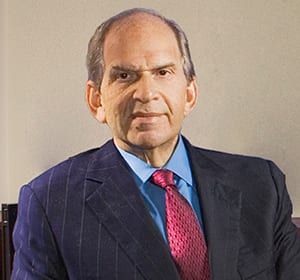
“If you are an investment banker and you are not paid to win, you have the wrong job.” Bruce Wasserstein
Bruce Wasserstein was the most influential M&A banker of his generation and the architect of the modern hostile-takeover playbook. If Felix Rohatyn was the statesman, Wasserstein was the tactician. Where Rohatyn won mandates with judgment and patience, Wasserstein won them with intensity, process design, and a willingness to outwork everyone else in the room. He believed mergers were engineering problems, and he treated them that way.
Over a 32-year career he advised on more than a thousand transactions worth roughly $1 trillion, ran the M&A franchise at three different firms, wrote the canonical insider account of the era, and became one of the wealthiest bankers in American history. The boutique model he built with Joe Perella in 1988, Wasserstein Perella & Co, was the template that Evercore, Centerview, PJT and Moelis would later copy.
The Brooklyn prodigy
Bruce Wasserstein was born in Brooklyn in 1947, the son of a textile-importer father and a community-volunteer mother. The Wassersteins were the kind of New York Jewish family in which dinner-table arguments produced two extraordinary careers: Bruce in finance, and his older sister Wendy as a Pulitzer Prize-winning playwright. Their mother, Lola, kept a sign on the kitchen wall that read ‘a good name is more valuable than gold.’ Both children took it literally.
Wasserstein entered the University of Michigan at 16 and graduated at 19. He went directly to Harvard, where he earned a joint JD and MBA in just three years instead of the usual four. By 24 he had practised securities law at Cravath, Swaine & Moore, completed a Knox Fellowship at Cambridge, and decided that the practice of law was too slow. He joined First Boston in 1977 as a junior banker.
The First Boston years
His career at First Boston is the founding story of modern hostile M&A. He arrived in the corporate finance department in 1977. Joe Perella, the firm’s head of M&A and a man six years his senior, had been building a small mergers team. Wasserstein joined. By 1979, at 31, he was Perella’s co-head. Together they ran what became the most aggressive M&A practice on Wall Street.
Their tactical playbook was new. Most banks at the time had M&A departments that drafted opinion letters and waited for the corporate finance group to bring them work. Wasserstein and Perella treated M&A as a stand-alone discipline. They prospected. They generated ideas. They told CEOs which targets to attack and which defences to deploy. When a client wanted to bid hostile, they had a written tender-offer playbook ready before the call ended.
Between 1979 and 1988 First Boston M&A advised on Texaco-Getty (the $10 billion 1984 transaction that became a notorious court case), Du Pont-Conoco (a three-way contested bid in 1981 that they won by tactical speed), and the original KKR mandates that produced Beatrice, Storer, Owens-Illinois and ultimately RJR.
-
Tactic 1
The bear hug letter
A private letter to a target board offering a price well above market. Forces directors to negotiate or face shareholder lawsuits.
-
Tactic 2
The two-tier tender
Cash for 51%, paper for the rest. Coerces shareholders to tender quickly to avoid the back-end. Eventually outlawed in many states.
-
Tactic 3
The lock-up option
A friendly bidder secures the right to buy a target's crown-jewel assets, deterring rival bidders. Wasserstein perfected this for Du Pont in the Conoco fight.
-
Tactic 4
The poison pill defence
Co-developed with Wachtell Lipton lawyers in the early 1980s. Lets a target dilute a hostile acquirer's stake automatically. Changed hostile tactics forever.
RJR Nabisco and the boutique founding
In February 1988 Wasserstein and Perella walked off the First Boston M&A floor on a Friday and announced their own firm on the following Monday. Wasserstein Perella & Co opened with roughly 30 bankers in a midtown office, no balance sheet, and the entire First Boston M&A client list following them out the door. It was the most aggressive boutique launch in Wall Street history.
Eight months later KKR called. The leveraged buyout of RJR Nabisco was about to become the largest contested M&A transaction in history. Wasserstein was lead banker to KKR. The deal closed at $109 per share, or roughly $31.4 billion. Wasserstein Perella collected one of the largest single advisory fees ever paid to that point. The boutique had arrived.
Through the 1990s the firm built out offices in London, Frankfurt and Tokyo. It advised on Time-Warner, Viacom-Paramount, the Bertelsmann transactions, Nokia’s restructuring, and most of the European post-deregulation utility consolidations. At its peak it had under 400 bankers and was generating roughly $500 million in annual revenue, the kind of revenue per head that no balance-sheet bank could match.
In 2000 he sold the firm to Dresdner Bank for stock worth roughly $1.4 billion. Two years later, in a remarkable career pivot, he became chairman of Lazard, the firm he had spent two decades competing against.
Big Deal and the playbook on paper
While running Wasserstein Perella, Wasserstein wrote Big Deal: The Battle for Control of America’s Leading Corporations. Published in 1998, the book runs to 819 pages and is the single most detailed first-person account of 1980s and 1990s M&A by a sitting practitioner. It walks through every major transaction of the period from the inside: who called whom, what each side calculated, where the tactical mistakes were.
The book is still on the desk of every senior M&A banker. The opening section codifies Wasserstein’s tactical doctrine: the first bidder usually wins, speed beats analysis, the board cares about defensibility more than price, the press matters more than people admit, and the willingness to walk away is the only thing that makes advice expensive.
Wasserstein's first principle of hostile takeovers: the first bidder almost always wins, not because the first bid is highest, but because the first bidder has set the agenda, framed the price, and forced the target into a reactive posture. In a contested fight, initiative is worth more than valuation.
Lazard and the late career
In November 2001 Lazard’s last working chairman, Michel David-Weill, hired Wasserstein to restructure the firm. The mandate was open-ended: clean up the partnership, end the family dominance, and prepare Lazard for the public markets. Over the next three years Wasserstein bought out the older Lazard partners, raised outside capital, restructured the global compensation system, and shepherded the firm to a 2005 IPO at $25 a share.
The IPO made him one of the wealthiest bankers in America. He remained chairman of Lazard until his sudden death on 14 October 2009, at age 61, of a heart arrhythmia. Lazard’s share price fell 8% on the news. There was, briefly, no one in M&A who knew what to do next.
What to learn from Wasserstein
For an analyst or associate, the Wasserstein career is the second necessary reference after Rohatyn. Rohatyn shows you what the senior adviser looks like at the franchise stage. Wasserstein shows you what it takes to get there: relentless tactical mastery, willingness to break with the old firm, and the conviction that M&A is not a relationship business with technical edges, but a technical business that earns relationships once you are demonstrably better than everyone else at the work.
Career timeline Key moments
- 1947 Born in Brooklyn, New York. Older sister Wendy Wasserstein later becomes the Pulitzer-winning playwright.
- 1967 Graduates University of Michigan at age 19, having entered at 16.
- 1971 Earns a joint JD/MBA from Harvard Law and Harvard Business School.
- 1977 Joins First Boston as a corporate lawyer. Moves to the M&A group almost immediately, paired with Joe Perella.
- 1979 Made co-head of First Boston M&A with Joe Perella at 31. They build the most aggressive hostile-takeover practice on Wall Street.
- 1981 to 1988 Advises Texaco on the Getty acquisition, Du Pont on Conoco, KKR on multiple buyouts, and on the defining tender offers of the era.
- 1988 Leaves First Boston with Joe Perella to found Wasserstein Perella & Co. Advises KKR on the $31.4 billion RJR Nabisco buyout shortly after.
- 1990s Builds Wasserstein Perella into a global boutique with offices in New York, London, Frankfurt and Tokyo. Begins acquiring stakes in publishers and operating businesses.
- 1998 Publishes Big Deal: The Battle for Control of America's Leading Corporations, the inside account of every major hostile deal of the 1980s and 1990s.
- 2000 Sells Wasserstein Perella to Dresdner Bank for roughly $1.4 billion in stock.
- 2002 Becomes chairman of Lazard. Negotiates the firm's IPO over three years against its remaining family partners.
- 2005 Takes Lazard public on the NYSE at $25 a share. Becomes one of the wealthiest bankers in America.
- 2009 Dies unexpectedly of a heart arrhythmia at age 61. Lazard's share price drops 8% on the news.
In their own words Selected quotes
-
“If you are an investment banker and you are not paid to win, you have the wrong job.”
Bruce Wasserstein -
“Every deal is a story. The banker who can tell the better story to the board usually gets the engagement.”
Bruce Wasserstein, Big Deal -
“In a hostile, the first bid is almost never the winning bid. But the first bidder is almost always the winner.”
Bruce Wasserstein, Big Deal
Notable and surprising Things you might not know
- His older sister was the Pulitzer Prize-winning playwright Wendy Wasserstein. The Wasserstein dinner table in Brooklyn produced two of the most accomplished careers in twentieth-century American letters and finance.
- He graduated from the University of Michigan at 19 and held a JD and MBA from Harvard by 24. He never worked outside the law or M&A.
- The nickname 'Bid 'em up Bruce' came from rival bankers who accused him of pushing his clients to overpay. He embraced it. He believed the marginal extra few percent on a transaction price almost always proved to be irrelevant compared to the strategic value of winning.
- He wrote Big Deal (1998) over three years while running Wasserstein Perella. It runs to 819 pages and remains the most detailed first-person account of 1980s and 1990s M&A ever published by a sitting practitioner.
- He sold Wasserstein Perella to Dresdner Bank in 2000 for roughly $1.4 billion in stock. By 2002 he was chairman of Lazard, his old firm's biggest rival. By 2005 he had taken Lazard public. Few bankers have run three franchises in a single career.
The Playbook How Bruce built it
- 01 Win the tactical war and the strategic narrative settles itself. Tender mechanics and timing decide hostile fights more than valuation.
- 02 Always bid first if you have to win. Wasserstein's rule: the highest bidder by a small margin nearly always prevails.
- 03 Boutiques scale by reputation, not headcount. Wasserstein Perella reached billion-dollar fees with under 400 bankers.
- 04 Process design is the product. Auctions, defences, and bear hugs are engineering problems, not vibes.
- 05 Be willing to walk. The credible willingness to drop a mandate is what makes a banker's advice expensive.
Published May 16, 2026