Felix Rohatyn
The Dealmaker Statesman
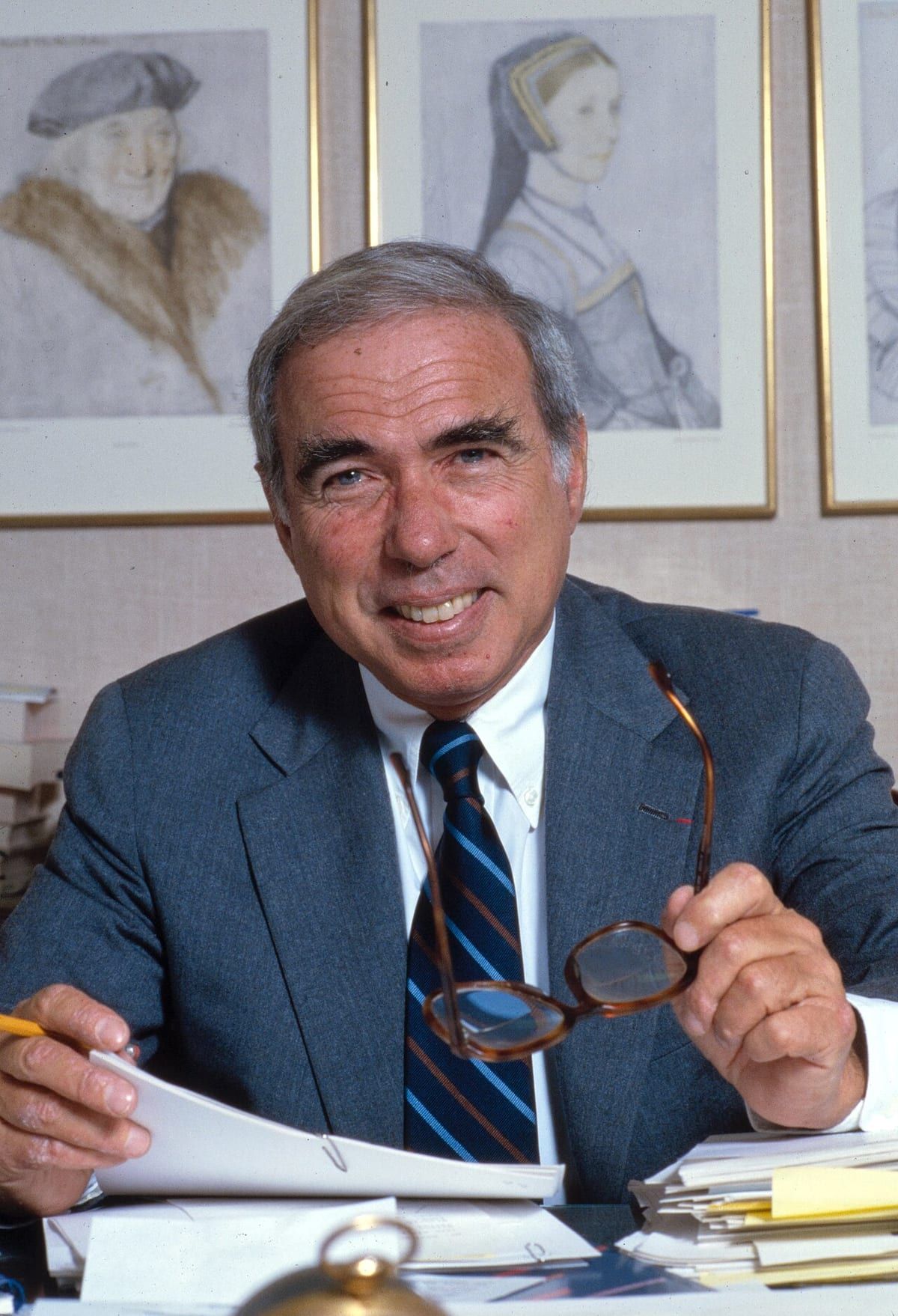
“I always thought the most important part of being a banker was telling clients what they did not want to hear.” Felix Rohatyn
If you want to understand what an investment banker actually does at the highest level, you do not start with a bulge-bracket firm with twelve thousand employees and a trading floor the size of a football field. You start with one man on the 32nd floor of Rockefeller Center, with a small team, no capital at risk, and a phone that rings whenever a Fortune 500 CEO is about to do something he cannot publicly admit yet. That man, for forty years, was Felix Rohatyn.
Rohatyn was the dominant M&A adviser of the post-war American economy and the architect of the modern pure-advisory boutique. He never managed a balance sheet, never ran a trading desk, never built a sales force. He sold judgment, discretion, and access. Goldman Sachs and Morgan Stanley, the firms that now dominate league tables, copied his model for their advisory franchises. Centerview, Evercore, Moelis, PJT, Lazard itself in its modern form, all trace their DNA back to the Lazard of Andre Meyer and Felix Rohatyn.
From Vienna refugee to Lazard partner
Felix Rohatyn was born in Vienna in 1928 to a Jewish family that ran a small brewery. In March 1938 the Nazis annexed Austria. The family fled, first to France, then ahead of the German invasion in 1940 to Spain, Portugal, Casablanca and finally by ship to Rio de Janeiro. They arrived in New York City as refugees in 1942. He was 14, spoke broken English, and had seen first-hand what happens when institutions collapse.
He worked his way through Middlebury College and graduated in 1948 with a degree in physics. He had no contacts on Wall Street. He took a summer job as a clerk at Lazard Freres, then a tiny European partnership headquartered in a Rockefeller Center suite, and never left. The firm was run by Andre Meyer, another refugee, who had escaped Vichy France in 1940 and rebuilt the New York office with a handful of partners. Meyer became Rohatyn’s mentor and the single most formative figure of his career.
Meyer’s lesson was simple. The bank had two assets, brains and reputation. Capital was a distraction. The job was to advise CEOs on the most important transactions of their careers, and the way to win mandates was to make yourself indispensable to one or two of them. Concentrate, do not diversify.
The ITT years
Rohatyn made partner at Lazard in 1961 and almost immediately attached himself to Harold Geneen, the chief executive of ITT. Geneen was building the most acquisitive conglomerate in American corporate history. Between 1961 and 1971 he completed roughly 350 acquisitions, of every imaginable kind: car-rental businesses, baking companies, hotel chains, electronics firms, parking-lot operators.
Rohatyn was the principal banker on most of them. He served on the ITT board. He drafted the strategy memos. He negotiated the prices. The defining transaction was the 1968 acquisition of Hartford Insurance, then the second-largest property and casualty insurer in the country, for $1.5 billion in ITT stock. It was the largest M&A deal of its kind to that point. It also became a federal antitrust case under the Nixon administration that nearly broke Geneen and put Rohatyn on the front page of every paper in America.
ITT taught him the playbook for advising serial acquirers, which is the same playbook Goldman, Lazard and Centerview use today on Berkshire, Constellation Software and any large strategic buyer: be on the inside, know the next ten targets, be the first call when a board needs cover.
-
Principle 1
Concentrate on one or two CEOs
Rohatyn's ITT mandate produced more revenue than most banks' entire client lists. Depth beats breadth in advisory.
-
Principle 2
Stay on the board
Information advantage compounds. The director sees the strategy memo before the banker.
-
Principle 3
No capital at risk
Lazard never underwrote. The advice was the product, and the absence of conflicts was the moat.
-
Principle 4
Discretion is mandatory
Rohatyn never leaked. CEOs hire boutiques precisely because the news will not appear in tomorrow's Journal.
Saving New York
In the spring of 1975 New York City was technically insolvent. Years of off-balance-sheet borrowing had produced roughly $14 billion in debt. The major banks refused to roll over the notes. Mayor Abraham Beame and Governor Hugh Carey turned to Rohatyn. The state created the Municipal Assistance Corporation, a special-purpose vehicle that would issue new bonds backed by city sales-tax revenue and use the proceeds to refinance the old debt at lower coupons. Rohatyn served as chairman of MAC, without compensation, for the next eighteen years.
MAC issued roughly $10 billion of bonds in stages. The combination of those issuances, federal loan guarantees, and an austerity programme negotiated with the city’s unions, kept New York out of bankruptcy court. The rescue became the textbook case in municipal restructuring and is still studied at every business school.
For Rohatyn personally, it was the moment his name became national currency. He had been a successful banker before MAC. After MAC he was the most trusted M&A counsel in the country. Every CEO who picked up the phone knew exactly who he was, and what he had done for the city.
The banker's lesson from MAC: public service is not a charitable distraction from a private practice. It is the single most efficient credentialing exercise an adviser can undertake. Rohatyn did not bill for MAC, and it generated more advisory fees over the next twenty years than any single deal he ever closed.
The Lazard franchise
Through the 1980s and 1990s Lazard, with Rohatyn as senior dealmaker, advised on a long line of landmark transactions: GE’s acquisition of RCA in 1986, Time’s defence in the 1989 Paramount fight, Kraft, Nabisco, Lehman, Disney, ABC. He was personally on most of the calls that mattered.
The firm operated with three working partnerships, one in New York, one in London, one in Paris, and fewer than 100 partners worldwide. The contrast with Goldman or Morgan Stanley, each of which had thousands of bankers by then, was the whole point. The product was scarcity. Each client felt they were getting the senior person, because they actually were.
He retired from Lazard in 1997 to become US Ambassador to France under President Clinton, served three years in Paris, and returned to the firm as a senior adviser in 2008 during the financial crisis. He died in 2019 at age 91. The boutique advisory model he pioneered is now the fastest-growing segment of investment banking globally. Centerview, Evercore, PJT, Moelis and the rebuilt Lazard collectively earn billions in fees a year doing exactly what Felix Rohatyn started doing in 1948 with one phone line and one mentor in Rockefeller Center.
What to learn from Rohatyn
If you are a banking analyst or associate today, the Rohatyn career is the clearest road map in the industry. The skills he built, in order, were: technical competence on transactions, mastery of one strategic acquirer, public reputation through a high-visibility civic project, and finally franchise authority that brought CEOs to him without prospecting. None of it required a balance sheet, a trading floor, or scale. All of it required judgment, discretion, and the willingness to tell powerful people things they did not want to hear.
Career timeline Key moments
- 1928 Born in Vienna, Austria, to a Jewish family.
- 1942 Family escapes Nazi-occupied Europe via France, Spain, Portugal, Casablanca and Rio de Janeiro, arriving in New York City as refugees.
- 1948 Graduates from Middlebury College and joins Lazard Freres as a junior trainee. His mentor is Andre Meyer, the legendary refugee-banker who ran the firm.
- 1961 Made partner at Lazard. Begins advising Harold Geneen at ITT, the most acquisitive conglomerate of the 1960s.
- 1968 ITT acquires Hartford Insurance for $1.5 billion. Rohatyn structures and brokers the transaction. It becomes the defining conglomerate deal of the era and later a federal antitrust case.
- 1975 Appointed chairman of the Municipal Assistance Corporation, the entity created to refinance New York City's debt and avert municipal bankruptcy. He spends two decades structuring MAC bonds that save the city.
- 1980s Lazard, with Rohatyn as senior dealmaker, becomes the most influential M&A boutique on Wall Street. Major mandates include the GE-RCA deal and several hostile defences.
- 1997 Retires from Lazard. Appointed by President Bill Clinton as US Ambassador to France, serves until 2000.
- 2008 Returns to Lazard as a senior adviser amid the financial crisis. Counsels the firm and a number of public-sector clients on rescue financings.
- 2019 Dies in New York at age 91.
In their own words Selected quotes
-
“I always thought the most important part of being a banker was telling clients what they did not want to hear.”
Felix Rohatyn -
“An investment bank is a collection of people. Nothing more, nothing less.”
Felix Rohatyn, on the Lazard model -
“A merger should make sense the morning after, not just the day it is announced.”
Felix Rohatyn, in client letters
Notable and surprising Things you might not know
- He arrived in the United States in 1942 as a 14-year-old refugee with little English. He died in 2019 having shaped more of American corporate history than almost any banker of his generation.
- Andre Meyer, his mentor at Lazard, told him in 1948 that the only assets a banker has are his brains and his reputation. Rohatyn repeated this line for sixty years.
- He was the principal architect of the Municipal Assistance Corporation, the device that saved New York City from default in 1975. He took no fee for the work.
- He served as US Ambassador to France from 1997 to 2000. He spoke fluent French because his family had fled through France in 1940.
- Lazard during his peak years had fewer than 100 partners worldwide and routinely advised on the largest deals on the New York Stock Exchange.
The Playbook How Felix built it
- 01 Pure advisory beats balance-sheet banking in influence per head. No capital at risk, no conflicts, fees go to people not to product.
- 02 The relationship is the franchise. CEOs hire individuals. Lazard built itself around three or four indispensable partners at any time.
- 03 Public service compounds private credibility. The MAC rescue made Rohatyn the most trusted M&A counsel in the country.
- 04 Boutiques win by saying no. A small team can decline most deals; a balance-sheet bank cannot.
- 05 Discretion is the product. Rohatyn never leaked, never spoke out of school, and clients hired him because of it.
Published May 16, 2026