Robert Greenhill
The First Modern M&A Banker
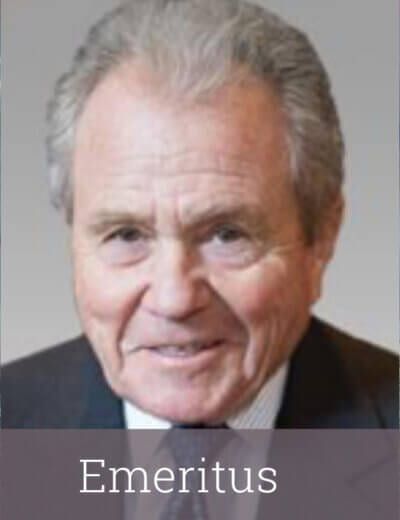
“If your client is in a difficult deal and your phone does not ring at three in the morning, you are not the lead banker.” Bob Greenhill
Bob Greenhill is the most under-credited figure in the history of M&A advisory. While Felix Rohatyn was building Lazard in the 1960s and Bruce Wasserstein was at Cravath training to be a lawyer, Greenhill was inside Morgan Stanley arguing for something nobody on Wall Street had: a stand-alone M&A department.
In 1972 he won the argument. Morgan Stanley created the first dedicated mergers advisory unit at any major Wall Street firm, with Greenhill as its first head. Within four years every major bulge-bracket firm had copied the structure. The modern M&A franchise is a Greenhill invention.
From Navy aviator to banker
Robert F. Greenhill was born in New York City in 1936. He graduated from Yale University in 1958 and was immediately commissioned into the United States Navy, where he served two years as an aviator flying anti-submarine patrols out of Quonset Point in Rhode Island. The Navy taught him a habit that would define his career: the willingness to do the work, including the unglamorous parts, before the technology let anyone else do it for you. He still pilots a jet at 89.
He earned an MBA from Harvard Business School in 1962 and went directly to Morgan Stanley as a junior banker. The firm at the time was a small, white-shoe partnership that did almost no transactional advisory; it was primarily an underwriter of corporate bonds for its long-time clients. Greenhill spent the 1960s working with industrial clients on financing and capital structure questions, and by the late 1960s he had spotted what would become the defining trend of the next two decades: large American corporations were starting to buy each other in record volumes.
The 1972 argument
In 1972 he made a formal pitch to the Morgan Stanley senior partners. Mergers and acquisitions, he argued, should be a stand-alone department. Most banks at the time treated M&A as a sub-task of corporate finance: a corporate finance banker would draft an opinion letter when a client wanted to buy a competitor. Greenhill wanted a dedicated team that did nothing but advise on transactions, prospect for new ones, and develop the technical infrastructure (valuation models, tender mechanics, antitrust analysis) that the work required.
The partners agreed. Greenhill became the first head of Morgan Stanley M&A. The decision turned out to be one of the most lucrative single organisational moves any Wall Street firm has ever made. Within a decade the M&A group was generating a disproportionate share of the firm’s revenue. Within two decades it was the most important franchise inside the firm.
-
Innovation 1
Dedicated team
M&A as a stand-alone unit with its own recruiting pipeline, its own compensation, and its own client-relationship plan. Every modern advisory franchise mirrors this design.
-
Innovation 2
Industry coverage on top
Bankers organised by industry vertical (technology, energy, consumer) rather than by product. Lets the firm own a client relationship across all transactions, not one deal at a time.
-
Innovation 3
The technical playbook
Standardised valuation methodologies, tender mechanics, fairness opinion process. Greenhill's group wrote the procedures that every modern M&A associate is trained on in week two.
-
Innovation 4
Senior banker on every call
The cardinal rule. A senior partner attended every client meeting, even when junior bankers could have handled it. The reputation built faster than anyone expected.
IBM and the Rolm deal
Through the 1980s Greenhill personally advised on the defining transactions of the era. The most important was IBM’s $3.5 billion acquisition of Rolm Corporation in 1984. IBM was buying its way into the telecommunications business; the deal was one of the largest technology M&A transactions to that point. Greenhill was lead banker. The transaction set the template for technology-driven M&A that Microsoft, Cisco, Oracle and Google would later use repeatedly.
In 1989 Morgan Stanley made Greenhill president of the firm. He continued to run M&A. He served in that role until 1993, when he left to become chairman and CEO of Smith Barney, then a unit of Travelers. The Smith Barney move was a brief detour that he later said taught him the limits of large balance-sheet institutions. He left in 1996.
Founding Greenhill & Co
In June 1996, at age 60, he founded Greenhill & Co with five partners. The firm was a pure advisory boutique. No balance sheet. No underwriting. No trading. No principal investments. The model was straight Lazard, but with an American partner culture rather than the European family-firm structure.
The firm grew slowly and deliberately. By 2000 it had roughly 80 bankers across New York and London. By 2004 Greenhill took the firm public on the NYSE at $17.50 a share, becoming the first independent M&A boutique to list in the modern era. The IPO was a defining moment for the boutique sector. It proved that the public markets would value pure-advisory revenue at a multiple comparable to traditional asset-light businesses.
By 2010 Greenhill & Co was generating more than $300 million in annual revenue on roughly 300 employees. The stock had been above $90 a share. The model worked.
Greenhill's first principle of the advisory firm: independence is a balance-sheet decision, not a marketing slogan. The moment a firm takes principal risk, it starts optimising for its own positions rather than the client's. The boutique model is structurally honest because there is nothing else for it to be.
The slow decline and sale
The 2010s were harder. The bulge-bracket banks had largely caught up on advisory talent. Centerview, Evercore and Moelis emerged as faster-growing competitors with hungrier partnerships. Greenhill & Co’s revenue plateaued and then declined modestly. The stock fell from its 2009 peak. The firm continued to advise on important transactions but was no longer the dominant pure-play boutique.
In 2023 Mizuho, the Japanese banking group, acquired Greenhill & Co for roughly $550 million. The acquisition ended the firm’s run as an independent partnership. Greenhill himself stayed on as a senior adviser. The model he had spent a career building was now part of a global universal bank, which was exactly the kind of institution he had spent 30 years arguing was structurally compromised.
What to learn from Greenhill
For an analyst or associate, Greenhill is the model of patient, organisational innovation. He did not win on tactical brilliance the way Wasserstein did, nor on franchise gravity the way Rohatyn did. He won on a single structural insight, executed before anyone else: that advisory deserved its own department, its own people, and its own balance-sheet-free firm. The career took 50 years to play out. The structural decision he made in 1972 still defines how Wall Street is organised today.
Career timeline Key moments
- 1936 Born in New York City.
- 1958 Graduates Yale University. Commissioned in the United States Navy. Serves two years as an aviator.
- 1962 Earns MBA from Harvard Business School. Joins Morgan Stanley as a junior banker.
- 1970 Made partner at Morgan Stanley at age 34.
- 1972 Persuades the firm to create a dedicated M&A department. Becomes its first head. Morgan Stanley is the first major Wall Street firm with a stand-alone mergers advisory unit.
- 1984 Advises IBM on its $3.5 billion acquisition of Rolm Corporation, one of the largest technology M&A deals of the era.
- 1989 Promoted to president of Morgan Stanley. Continues to run M&A simultaneously.
- 1993 Leaves Morgan Stanley to become chairman and CEO of Smith Barney, then a unit of Travelers.
- 1996 Founds Greenhill & Co with five partners and an initial team of roughly 25 bankers. The firm operates with no balance sheet, no underwriting, and no trading.
- 2004 Takes Greenhill & Co public on the New York Stock Exchange. The IPO is among the most successful boutique listings of the decade.
- 2010 Greenhill & Co reaches peak revenue of more than $300 million on roughly 300 employees.
- 2019 Steps down as chairman. Greenhill & Co is later acquired by Mizuho in 2023 for roughly $550 million.
In their own words Selected quotes
-
“If your client is in a difficult deal and your phone does not ring at three in the morning, you are not the lead banker.”
Bob Greenhill -
“Boutiques work because they refuse the business that the integrated banks need to accept.”
Bob Greenhill, 2004 prospectus letter -
“We are paid to give advice. Advice is the simplest product in finance and the hardest to give well.”
Bob Greenhill, on the founding of Greenhill & Co
Notable and surprising Things you might not know
- He was a naval aviator before he was a banker. He flew anti-submarine patrols out of Quonset Point from 1958 to 1960.
- He persuaded the senior partners of Morgan Stanley in 1972 to create the first stand-alone M&A group on Wall Street. The other major firms followed within four years.
- Greenhill is a private pilot. He owned and operated a Cessna Citation jet for personal travel into his 80s and used to fly himself to client meetings.
- He took Greenhill & Co public on the NYSE in 2004 at $17.50 a share. The stock traded above $90 a share at its peak in 2009.
- Greenhill & Co was sold to Mizuho in 2023 for roughly $550 million. The transaction marked the end of the firm as an independent partnership, exactly the model Greenhill had built it to be.
The Playbook How Robert built it
- 01 Be willing to be first. Greenhill built the first stand-alone M&A department on Wall Street when others thought the work belonged inside corporate finance.
- 02 Independence is a balance-sheet decision. The moment you take principal risk, you start optimising for the wrong client.
- 03 Travel to the client. Greenhill's reputation was built partly on the simple discipline of always going to see the CEO in person.
- 04 Hire for character. Greenhill & Co's founding partners had all worked together for decades. The model was loyalty before genius.
- 05 An advisory firm is the longest-running compound interest machine in finance. Sixty years of one trusted relationship is worth a thousand cold-call mandates.
Published May 16, 2026