Brad Jacobs
The Modern Rollup Architect
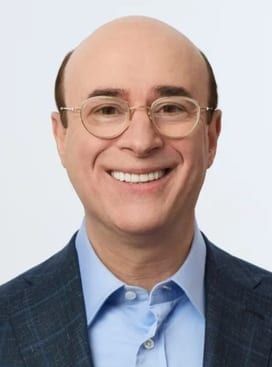
“The biggest mistake people make in business is not thinking big enough.” Brad Jacobs
There is one operator alive today whose career is the most directly useful reference for anyone trying to build wealth through mergers and acquisitions. His name is Brad Jacobs. He has built five publicly traded billion-dollar companies, in five separate industries, using more or less the same playbook each time. In 2024 he wrote the playbook down. It is, without exaggeration, the most candid public account of how modern rollups actually work that any active practitioner has ever published.
For the ambitious operator, his career is more instructive than the 1980s raiders precisely because he is doing it now, with the same balance-sheet structures and capital markets you have access to, in industries you can study in real time. The mechanics are not period-specific. They are the modern playbook.
From Brown drop-out to the oil pits
Bradley S. Jacobs was born in Providence, Rhode Island in 1956. He attended Bennington College for a brief stretch and then Brown University, and dropped out of Brown at 19 without completing a degree. The academic exit was not failure; it was opportunism. He had decided he wanted to be in business immediately and that the path through college would slow him down.
At 23, in 1979, he founded Amerex Oil Associates with three partners and a single phone line, trading physical oil spot cargoes during one of the most turbulent moments in the history of the energy markets. Within five years, Amerex had become one of the largest physical oil brokers in the world. He sold it. In 1984 he founded Hamilton Resources, an oil and gas exploration firm, and ran that into the mid-1980s.
By the time he turned 30 he had built and exited two companies, had become familiar with public capital markets, and had developed the conviction that would shape everything that followed: that the cheapest way to build a very large company in the United States was to consolidate a fragmented industry through patient acquisition.
United Waste, the first rollup
In 1989 he founded United Waste Systems with that exact thesis. The North American waste-hauling industry was textbook material: thousands of independent operators, recurring revenue, sticky local relationships, no clear national leader. He ran the standard rollup play. Acquire small regional haulers. Standardise the routes and the back office. Use public-market currency to fund the next acquisition. Concentrate geographically before expanding.
By 1997 he had built United Waste into the country’s third-largest waste company. That summer he sold it to USA Waste Services for $2.5 billion. The trade made him personally wealthy. More importantly, it confirmed the playbook worked the second time he had run a version of it.
United Rentals: the IPO speed record
What he did next is almost folklore in operator circles. The same year he sold United Waste, he founded United Rentals. The strategy: do for the equipment-rental industry exactly what he had just done for the waste-hauling industry.
The execution was unprecedented in pace. United Rentals closed roughly thirty acquisitions in its first nine months of operation. It went public on the New York Stock Exchange in December 1997. By 2000, the company was the largest equipment-rental provider in North America. By 2007, after more than 250 acquisitions, it was a multi-billion-dollar public company that has remained a market leader for the two decades since.
Most operators who study Jacobs’ career study United Rentals first. The reason: the speed and the conviction. He raised a small initial pool of capital, lined up acquisition targets in parallel rather than sequentially, and ran them through a standardised diligence and integration process that he had refined inside United Waste. Each acquisition made the next one cheaper, faster, and less risky to execute.
XPO Logistics: the masterclass
In 2011 Jacobs moved to logistics. He acquired control of XPO Logistics, a small Michigan trucking and brokerage company doing $177 million in revenue. He installed himself as chairman and CEO. Then he ran the playbook for the third time, at the largest scale yet.

The XPO acquisitions were larger than anything he had done before. The 2015 purchase of Con-way for $3 billion brought one of America’s largest less-than-truckload carriers under the platform. Later the same year, the $3.5 billion acquisition of Norbert Dentressangle gave him European scale instantly. By 2020 XPO was a $17 billion company. It was, by any operational measure, the most complete demonstration of his method.
In 2021 he started doing the reverse manoeuvre. He spun off GXO Logistics, the world’s largest pure-play contract logistics business, as a separate public company. In 2022 he spun off RXO, the brokerage and managed transportation arm. Both became Fortune 500 firms in their own right. The original XPO continued operating as the less-than-truckload pure play. He had taken one platform and broken it into three larger platforms, each priced at the institutional-level multiple their separate businesses commanded.
The Jacobs Method
Across United Waste, United Rentals, and XPO, the same playbook keeps surfacing. In his 2024 book Jacobs lays it out with unusual candour, and several common moves recur in every interview, every shareholder letter, every public talk.
-
Move 01
Pick the industry, not the company
The right industry has tailwinds, fragmentation, recurring or sticky revenue, and a clear path to consolidation. Almost no playbook survives the wrong industry.
-
Move 02
Hire only A players. Pay them like A players.
One A player is roughly ten times more valuable than a B player. Pay aggressively above market for the people who actually compound the platform.
-
Move 03
Treat M&A as a learnable skill
Most operators are scared of acquisitions because they do not do enough of them. The hundredth deal is dramatically easier than the first. Build the muscle deliberately.
-
Move 04
Acquire through the whole cycle
Most acquirers slow down in downturns. The disciplined buyer accelerates. The cheapest tuckins of his career were closed in the years immediately after 2001, 2008, and 2020.
-
Move 05
Decentralise execution, centralise accountability
Local managers run the business. A small head office tracks the numbers weekly. Compensation is tied to specific, transparent metrics.
-
Move 06
Multiple arbitrage is the engine
When your public equity trades at a higher multiple than the private companies you can buy, each acquisition is cheaper in real terms. Build the platform's multiple deliberately.
-
Move 07
Have a macro thesis
Read economic history. Form a clear, specific view of where the world is going. Pick industries whose tailwinds line up with the next ten years, not the last ten.
-
Move 08
Run the integration in the first 90 days
Most acquisitions fail in integration, not in the deal. Move fast on systems, branding, comp, and culture. The longer the legacy company sits unchanged, the worse the outcome.
The eight moves above are not a checklist for one transaction. They are the operating constitution of an entire career. Jacobs has run a version of them five times now, in five industries, with at least one more in flight as of 2026.
The book and what comes next
Jacobs published How to Make a Few Billion Dollars in 2024. It is the most detailed first-person account of the modern rollup playbook in print. The book became a New York Times business bestseller and was widely circulated through the operator community: search funds, family offices, private equity associates, founders contemplating a buy-and-build strategy.
In late 2023 he had quietly launched QXO, a new platform aimed at consolidating the building-products distribution industry, which by his analysis fit every one of his criteria. As of the most recent reporting, QXO has several billion dollars of committed equity, a clear acquisition pipeline, and Jacobs as executive chairman.
It is, by any reasonable estimate, his sixth attempt at the same fundamental method. If the historical pattern holds, the next decade will produce another billion-dollar exit and another set of operators who studied him while he was building it.
For the reader of this site, the practical takeaway is simple. The playbook above is not theoretical. It is in active use by the most successful current practitioner of M&A in the world, in an industry you can study right now, by an operator who has just published the methodology in a book. The most useful M&A education available in 2026 is to read his book, study his shareholder letters, and reverse-engineer the deals he is doing this quarter.
Then borrow what works.
Career timeline Key moments
- 1956 Born in Providence, Rhode Island.
- 1975 Drops out of Brown University at 19. He had previously attended Bennington College. He never returns to finish a degree.
- 1979 Founds Amerex Oil Associates, an oil-trading firm, at 23. Within a few years it is one of the largest spot-oil traders in the world.
- 1984 Founds Hamilton Resources Ltd, an oil and gas exploration company. Operates it through the mid-1980s before exiting.
- 1989 Founds United Waste Systems. The strategy: roll up the fragmented North American waste-hauling industry, region by region.
- 1997 Sells United Waste Systems to USA Waste Services for $2.5 billion. Founds United Rentals the same year.
- 1997 United Rentals goes public on the NYSE in December 1997 after only nine months of operating and roughly 30 acquisitions. The fastest equipment-rental rollup in history.
- 1998 to 2007 United Rentals continues acquiring, ultimately closing more than 250 transactions and becoming the largest equipment-rental company in North America.
- 2011 Acquires control of XPO Logistics, a small Michigan trucking company with $177 million in revenue. Becomes chairman and CEO.
- 2011 to 2021 Grows XPO through 17 acquisitions, including landmark deals for Con-way (2015) and Norbert Dentressangle (2015). Revenue reaches more than $17 billion.
- 2021 Spins off GXO Logistics, the world's largest pure-play contract logistics company, as a separate public entity.
- 2022 Spins off RXO, the brokerage and managed transportation arm, as another separate public company.
- 2024 Publishes How to Make a Few Billion Dollars, a book detailing his M&A playbook. Steps down as XPO chairman to launch QXO, his next platform.
In their own words Selected quotes
-
“The biggest mistake people make in business is not thinking big enough.”
Brad Jacobs -
“M&A is a learnable skill. Anybody who tells you it is some kind of mystical art is selling something.”
Brad Jacobs, How to Make a Few Billion Dollars (2024) -
“You can be the smartest person in the world, but if you pick the wrong industry, you will not make money. Industry comes first.”
Brad Jacobs, in interview -
“I would rather hire one A player and pay him three times the market than hire three B players.”
Brad Jacobs, How to Make a Few Billion Dollars -
“A great CEO is the cheapest capital you will ever buy.”
Brad Jacobs
Notable and surprising Things you might not know
- He dropped out of Brown University at 19 and has never held a college degree. His preferred form of education has always been operating companies and reading economic history.
- He founded his first company, Amerex Oil Associates, at 23 years old with three partners and a single phone line. Within five years it was one of the largest physical oil traders in the world.
- United Rentals went public roughly nine months after he founded it, an IPO speed record in the equipment-rental industry that still stands.
- He grew XPO Logistics from $177 million in annual revenue in 2011 to more than $17 billion by 2020, almost entirely through acquisition.
- He has personally led or directed more than 500 acquisitions over his career. The book he published in 2024 is the most candid first-person account of the modern rollup playbook ever written by an active practitioner.
- His 2024 book How to Make a Few Billion Dollars was the second best-selling Wall Street Journal business book of the year and a New York Times bestseller in business and finance.
- He launched a new platform, QXO, in late 2023 with several billion dollars of committed equity, aimed at consolidating the building products distribution industry. It is his sixth attempt at the same fundamental playbook.
The Playbook How Brad built it
- 01 The right industry comes first. Almost no playbook survives the wrong industry.
- 02 A players are roughly ten times more valuable than B players. Pay accordingly.
- 03 M&A is a skill that compounds. The hundredth acquisition is far easier than the first.
- 04 Decentralised execution, centralised accountability. Local managers run the business; the CFO measures it weekly.
- 05 Equity multiple is a tool. When yours is high, every acquisition gets cheaper in real terms.
Published May 15, 2026