Carl Icahn
The Corporate Raider
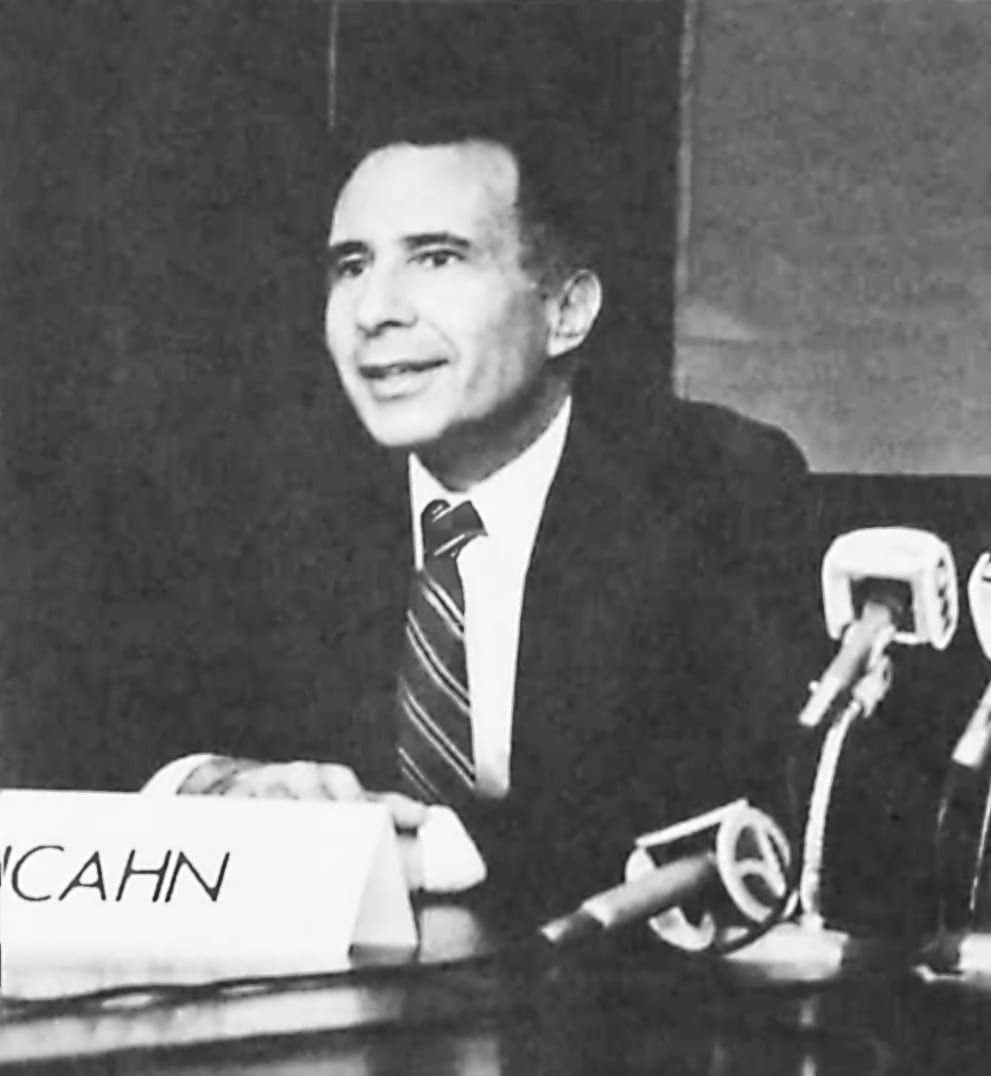
“If you want a friend on Wall Street, get a dog.” Carl Icahn
Carl Icahn grew up in a modest apartment in Far Rockaway, Queens, the son of Bella, a schoolteacher, and Michael, a cantor at a small synagogue who had trained as a lawyer and never practised. The family was not poor, but the household was airless and combative, and the young Icahn learned to argue early and often. His mother pushed him toward medicine. He preferred poker.
He arrived at Princeton in 1953 on a partial scholarship and covered the rest by working summers as a bellhop at Grossinger’s in the Catskills, where the maids’ quarters ran an all-night card game and the tips were quietly taxable. He took a philosophy degree in 1957, with a senior thesis on Carnap and Hempel’s empiricist criterion of meaning that almost nobody at Dreyfus or anywhere else would ever read. His mother got her wish anyway: he enrolled at NYU medical school that autumn.
The decision lasted two years. Icahn told friends the sight of patients made him claustrophobic, and the pace of rounds drove him to despair. He dropped out in 1957, joined the army, won around four thousand dollars at poker on base, and used the stake to begin trading. In 1961 he took a job at Dreyfus & Co., where the options desk was a backwater that nobody wanted. He spent a decade there working out the arithmetic of put-call parity before most of his competitors understood why it mattered, and in 1968, with a $400,000 loan from his uncle Elliot Schnall, he bought a seat on the New York Stock Exchange and hung out his own sign.
The first raids
By the late 1970s Icahn had drifted from options pricing into something stranger. He had noticed that certain American industrial companies, especially the sleepy, sprawling ones, were worth more in pieces than the market valued them as a whole. A determined outside shareholder, loud enough and credible enough, could sometimes force a board to close that gap. The technique was almost mechanical. Buy enough stock to be unignorable. Threaten a tender offer for the rest. Demand asset sales, a special dividend, new management, or a buyback of his own shares at a premium. If the board paid him to go away he won. If they refused and he took the company, he won by carving it up himself.
Tappan Stove was the prototype. He took a stake in 1977, ran a proxy fight on a platform of sale or breakup, and inside a year the company sold itself to Electrolux. Icahn’s profit was around $2.7 million, enough to fund everything that followed. Hammermill Paper, Saxon Industries, Marshall Field, Owens-Illinois, ACF Industries, Dan River, Phillips Petroleum: the same pattern repeated, with the targets growing each year. A few boards fought back and lost. Most paid him to leave.
The press eventually named the practice. Greenmail. The word welded “greenback” to “blackmail” and stuck. Icahn objected to the framing in interviews, sometimes with charm and sometimes with profanity, but he never disputed the arithmetic.
The TWA siege
By early 1985 he was looking at his largest target yet. Trans World Airlines was a household name, badly run, and quietly desperate. Frank Lorenzo of Texas Air had already tried to buy it on terms the unions despised, and TWA’s management was looking for any rescuer who was not Lorenzo. Icahn, who would later admit he barely flew and did not care for airlines, began buying shares in April. By summer he owned just over 20 percent of the company. The unions, terrified of Lorenzo, came to him with a remarkable proposition: roughly $300 million a year in wage concessions if he took control.
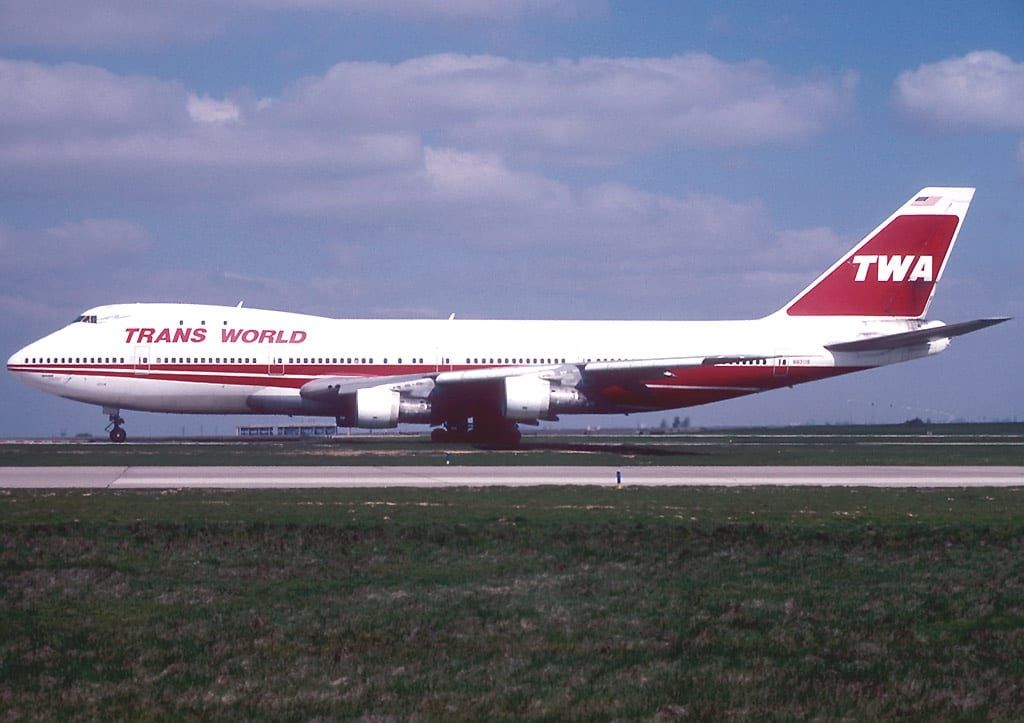
He took it. In January 1986 he became chairman of TWA. What followed was a clinic in value extraction. He sold the transatlantic routes to American Airlines in 1991 for roughly $445 million. He sold the prized London Heathrow landing slots. He took the company private in 1988 in a leveraged transaction that paid him around $470 million in cash and put the debt onto the airline’s balance sheet. By the time TWA filed for bankruptcy in 1992 he was long gone and richer. The business writer Allan Sloan, who covered the saga in real time, later wrote that Icahn had treated TWA “like a piggy bank with wings.”
The method
His genius was structural, not operational. A public company, Icahn understood, was not one entity but a parcel of separable assets: routes, real estate, brands, divisions, lease contracts. The market frequently priced the parcel for less than the sum of its parts, because boards lacked either the will or the freedom to break it apart. The raider’s job was to point this out, loudly, with enough capital behind him that the directors had no choice but to listen.
“The threat was the product. The takeover was just the delivery mechanism.”
When a board capitulated and bought him out at a premium, the campaign paid. When it refused and he took control, the carve-up paid. The strategy had no losing branch, only a slower one.
Activist, not raider
The Reagan-era raiders came apart in the late 1980s. Boesky cooperated. Milken pleaded. Drexel collapsed. Junk-bond financing dried up for a few years and the financial press lost interest in colourful villains. Icahn waited. He kept Icahn & Co. alive, kept the public holding vehicle that became Icahn Enterprises, and slowly traded one vocabulary for another.
By the mid-2000s the same playbook was running under a new name. “Activist investor” replaced “corporate raider”. Proxy fights became “engagements”. The targets grew bigger. He pushed for a breakup of Time Warner in 2006 and lost. He won a long campaign at Motorola that ended in the split between Motorola Mobility and Motorola Solutions. He bought into Yahoo, Netflix, Apple, eBay, Dell, Herbalife, Hertz, and Cigna, and made money on most of them.
Apple was the most public of the lot. On August 13, 2013, he tweeted that he had taken a “large position” and that the stock was extremely undervalued. The market added roughly $17 billion to Apple’s value that afternoon. He dined with Tim Cook to argue for a much bigger buyback. By the time he sold the position in 2016 he had cleared something close to $2 billion on the trade and helped push Apple into what would become the largest capital return program in corporate history.
Not every campaign worked. The Herbalife trade became a six-year public brawl with Bill Ackman, who shorted the stock on a pyramid-scheme thesis. Icahn went long, Ackman went short, and the disagreement spilled onto live CNBC in January 2013 in a thirty-minute on-air shouting match that traders watched in real time on their desks. Icahn eventually won the trade and lost very little of his appetite for confrontation.
Today
Icahn Enterprises is a publicly traded holding company with positions in automotive, energy, real estate, and packaging. The personal fortune has compressed and expanded with the years. A 2023 report from short-seller Hindenburg Research knocked roughly half off the stock in a few days. He answered with a long letter to shareholders, cut the dividend, and kept fighting. He is in his late eighties and still places phone calls at hours that make his counterparties wince. His vocabulary is gentler than it was at Tappan. His arithmetic is the one thing he has never bothered to change.
Career timeline Key moments
- 1936 Born to Michael Icahn, a cantor and frustrated lawyer, and Bella, a schoolteacher, in Far Rockaway, Queens.
- 1957 Graduates from Princeton with a philosophy degree, having paid the half of tuition his scholarship missed by winning at poker at a Catskills resort.
- 1961 Joins Dreyfus & Co. as a junior options trader after dropping out of NYU medical school and a stint in the army.
- 1968 Borrows roughly $400,000 from his uncle Elliot Schnall to buy a seat on the New York Stock Exchange and founds Icahn & Co.
- 1978 Wins his first major raid by forcing the sale of Tappan Stove to Electrolux, the deal that funds every campaign that follows.
- 1985 Accumulates a 20 percent stake in Trans World Airlines and accepts a union offer of wage concessions worth hundreds of millions a year.
- 1986 Becomes chairman of TWA in January, then starts selling routes, slots, and divisions.
- 1988 Takes TWA private in a leveraged transaction that pays him roughly $470 million in cash and saddles the airline with the debt.
- 2013 Tweets a single line about an Apple stake on August 13, adding an estimated $17 billion to Apple's market value that afternoon.
- 2016 Exits his Apple position with a profit reported at around $2 billion, having pressed Tim Cook into a much larger buyback program.
- 2023 Short-seller Hindenburg Research publishes a report on Icahn Enterprises, knocking roughly half off the holding company's stock in days.
In their own words Selected quotes
-
“Some people get rich studying artificial intelligence. Me, I make money studying natural stupidity.”
Carl Icahn -
“When most investors, including the pros, all agree on something, they're usually wrong.”
Carl Icahn, in interview -
“I enjoy the hunt much more than the good life after the victory.”
Carl Icahn -
“In life and business, there are two cardinal sins. The first is to act precipitously without thought. The second is to not act at all.”
Carl Icahn -
“You learn in this business: if you want a friend, get a dog.”
Carl Icahn (alternate phrasing of his signature line)
Notable and surprising Things you might not know
- His Princeton senior thesis was titled 'The Problem of Formulating an Adequate Explication of the Empiricist Criterion of Meaning'. He never wrote about philosophy again, but later said the discipline taught him how to win arguments.
- He paid the half of his Princeton tuition his scholarship did not cover by winning at poker at the Grossinger's Catskills resort, where he worked summers as a bellhop and cabana boy.
- He left NYU medical school after two years, telling friends the sight of sick people made him queasy, and enlisted in the army instead, where he walked off base with roughly $4,000 in poker winnings.
- His 1968 NYSE seat was bought with a loan from his uncle Elliot Schnall, a Long Island fragrance executive who insisted on the introduction price as a personal favour.
- Wall Street traders coined the term 'the Icahn lift' to describe the share-price jump that follows any news of him taking a position.
- A single tweet from his account on August 13, 2013 announcing a position in Apple added an estimated $17 billion to the company's market capitalisation in a single afternoon.
- He served as Donald Trump's 'special adviser on regulatory reform' from December 2016 to August 2017, resigning after questions about conflicts of interest involving his refinery holdings.
The Playbook How Carl built it
- 01 Buy a stake large enough that management has to return your call.
- 02 The credible threat of a takeover is often worth more than the takeover itself.
- 03 Undervalued assets plus an impatient board equals leverage you can monetize.
- 04 Never fall in love with the company. Fall in love with the spread.
Published January 12, 2025