Henry Kravis
The Buyout King
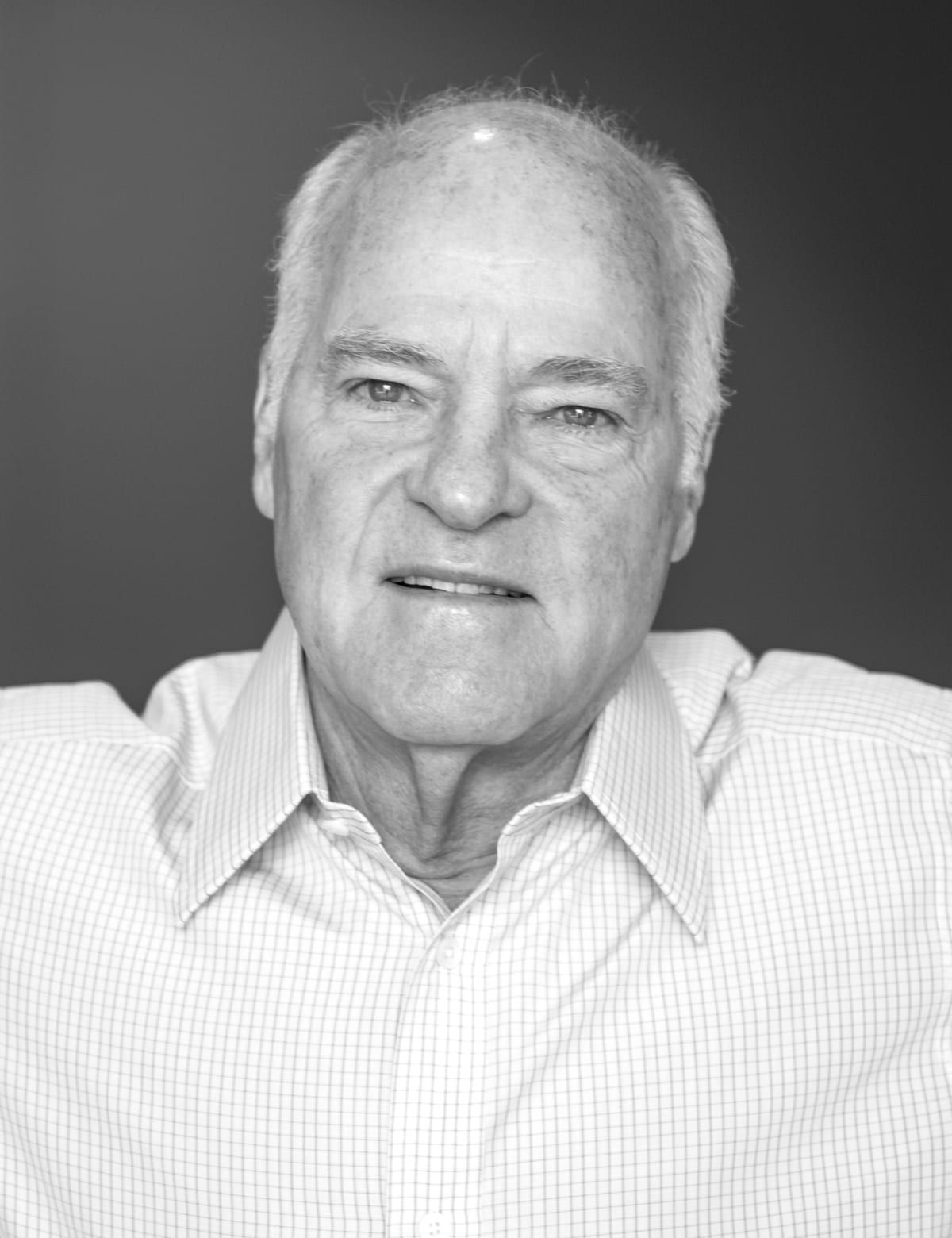
“Don't congratulate us when we buy a company. Congratulate us when we sell it.” Henry Kravis
Henry Kravis grew up in Tulsa, Oklahoma, in a household where oil was treated as a profession rather than a romance. His father, Raymond, was a petroleum engineer who had built a national consulting practice valuing oil and gas reserves, a respected technician who travelled constantly and whose clients, by family lore, included the Kennedys. Tulsa in the 1950s was a comfortable place to be the son of a successful oilman, and the young Kravis grew up with a precise sense of how reserves were calculated, how loans were collateralised, and how big a difference one extra dollar of debt made to the math.
He was a slow reader. His dyslexia was diagnosed late, and through school he compensated by doing problems out loud and refusing to leave them. He spent his last two years of school at the Loomis Chaffee boarding school in Connecticut, then went west to Claremont McKenna College in California, where by coincidence his cousin George Roberts ended up as a roommate. The two had been close growing up, with their mothers being sisters, but the college accident turned them into business partners for life.
He took a BA from Claremont in 1967 and an MBA from Columbia in 1969. The first job was at Madison Fund, a sleepy closed-end investment company. The second job, in 1970, was at Bear Stearns, in the corporate finance department run by a senior banker named Jerome Kohlberg.
The Kohlberg apprenticeship
Kohlberg was doing something at Bear Stearns that the rest of the firm barely had a name for. He was buying private and family-owned companies using mostly borrowed money, putting in a thin layer of equity, and letting the target’s own cash flow repay the loans. The technique was old, with origins going back to the 1950s, but Kohlberg had refined it into a repeatable process. He called the transactions ‘bootstrap acquisitions’. Wall Street, when it noticed at all, called them oddities.
Kravis and Roberts apprenticed under him for six years. By the mid-1970s the three of them were doing several of these deals a year inside Bear Stearns. The trouble was that the parent firm did not want to allocate balance sheet to the strategy. Bear’s executive committee considered the practice a niche, an annoyance, and at best a sideshow to the firm’s real business in equity underwriting and brokerage.
In 1976 the three of them walked out. They pooled around $120,000 in personal capital, took a small office at the Mutual of New York building, and opened for business as Kohlberg Kravis Roberts. There were no committed funds, no institutional limited partners, and no pipeline. There was a Rolodex, a thesis, and three names on a door.
Bootstrapping the bootstraps
The first deal, A.J. Industries, was a $25.6 million transaction syndicated to a small group of individuals Kohlberg knew personally. The next year there were three more deals of similar size. The model was simple, almost domestic in scale: find a stable, cash-generative private business whose owner wanted liquidity, structure a holding company funded with a mix of subordinated debt and a thin sliver of equity, install motivated management, pay down the loans over five to seven years, and sell.
The breakthrough came in 1979 with Houdaille Industries, a Florida machine-tool maker that had become a sleepy public conglomerate. KKR took it private at $380 million, the first time a leveraged buyout had been used at that scale on a listed company. The transaction introduced the phrase “going private” to the financial press and forced corporate lawyers across Manhattan to read up on a structure they had ignored.
By the mid-1980s KKR had institutional money behind it. State pension funds, particularly Oregon’s, had become large limited partners. The firm raised fund after fund, each one bigger than the last. The 1986 buyout of Beatrice Companies for $6.2 billion proved the model could scale into the billions: a sprawling food and consumer-products conglomerate broken into pieces and sold off in profitable parts over four years. The same year, KKR took Safeway Stores private in a $4.2 billion transaction whose post-closing restructuring became one of the most studied LBO case files of the era.
What separated KKR
The firm had always been more institutional than the freelance raiders of the period. Where Carl Icahn improvised, KKR scripted. Where Ivan Boesky gambled, KKR diligenced. Each deal followed a written checklist: identify a stable target with predictable cash flow, assemble a debt and equity syndicate, install aggressive incentive compensation for management, pay down the debt on a published schedule, exit within five to seven years. The discipline was deliberate, and it was the reason the same lenders kept showing up to fund the next deal.
“The raiders wanted a payday. KKR wanted an asset class.”
By 1987 KKR was the largest fee-paying client of more than a dozen New York investment banks and law firms. Its reputation was a working asset on the balance sheet. When the firm walked into an auction, the other bidders knew the financing was real.
RJR Nabisco
In October 1988, the CEO of RJR Nabisco, Ross Johnson, told his bankers he wanted to take the company private. Word of the management bid leaked within days. Kravis and Roberts entered the contest a week later, and what followed became the most famous corporate auction in the history of American business. The bidding ran for six weeks, with offers climbing past $20 billion, then $25 billion, then $30 billion. The auction ended on November 30, 1988, at $109 a share, a total acquisition price of $31.4 billion.

KKR had won. It had also paid a price that would haunt the firm for a decade. The debt service consumed cash flow that should have funded capex. The company sold off divisions to refinance and refinance. By the time KKR fully exited RJR in the late 1990s the firm had earned a modest return on the equity put in, but the deal was nothing like the bonanza the popular press had expected. Kravis later said it was the single most important deal of his career, mostly because of what it taught him about the limits of size. The story was permanently captured by Bryan Burrough and John Helyar in Barbarians at the Gate, a book Kravis is reported to dislike on principle.
The Kohlberg break
There was one casualty inside the firm. Jerome Kohlberg, the oldest of the three partners and the only one whose name carried the original franchise, had grown uneasy with the deals’ size and the increasing use of high-yield debt. He had taken medical leave in 1984 after surgery for a brain tumour, and on his return he found that Kravis and Roberts were running a much more aggressive shop than he had left. In 1987 he resigned. In 1989 he sued his former partners over the distribution of carried interest from earlier deals. The litigation settled in 1990 on undisclosed terms, but the rupture was permanent. Kohlberg’s name remained on the door.
The institution
KKR survived the hangover of the 1980s, and it did something the freelance raiders never managed: it became permanent. The firm went public on the New York Stock Exchange in 2010, raising fresh capital and giving its partners a tradable currency for the first time. The next decade saw a relentless diversification into credit, infrastructure, real estate, and insurance. By 2024 the public KKR was managing more than $600 billion in assets and had become a quasi-permanent fixture of the global capital stack.
Kravis and Roberts stepped down as co-CEOs in 2021, handing the operating job to Joseph Bae and Scott Nuttall. Both remain co-executive chairmen, both remain the firm’s two largest individual shareholders, and both still answer questions about deals from their cousins’ office on the 42nd floor of the Solow Building on West 57th Street.
The flamboyant takeover artist of the 1980s became the patient steward of an asset class. Kravis had always insisted the applause belonged at the exit, not the entrance. He built a firm designed to still be there when the applause came.
Career timeline Key moments
- 1944 Born in Tulsa, Oklahoma, the son of Raymond Kravis, a petroleum engineer who worked as an oil consultant to the Joseph P. Kennedy family among other clients.
- 1962 Graduates from the Loomis Chaffee boarding school in Connecticut, where dyslexia made him a slow reader and a determined one.
- 1967 Graduates from Claremont McKenna College in California, where he reconnects with his cousin George Roberts as a roommate.
- 1969 Receives an MBA from Columbia Business School and joins Madison Fund, a closed-end investment company in New York.
- 1970 Joins Bear Stearns to work for Jerome Kohlberg in the firm's corporate finance department, alongside George Roberts.
- 1976 Leaves Bear Stearns with Kohlberg and Roberts after the partners refuse to fund a dedicated buyout business, and founds KKR with roughly $120,000 in pooled capital.
- 1979 Closes the $380 million leveraged buyout of Houdaille Industries, the first LBO of a public company at any meaningful scale.
- 1986 Completes the $6.2 billion acquisition of Beatrice Companies, then the largest LBO ever done.
- 1987 Jerome Kohlberg resigns from KKR after disputes with Kravis and Roberts over the size, leverage, and structure of new deals.
- 1988 Wins the RJR Nabisco auction at $109 per share on November 30, a total acquisition price of $31.4 billion.
- 1989 Kohlberg sues Kravis and Roberts over the distribution of carried interest from earlier deals. The suit settles in 1990.
- 2010 KKR lists on the New York Stock Exchange under the ticker KKR after a complex transaction with its Amsterdam-listed vehicle.
- 2021 Steps down as co-CEO of KKR alongside Roberts. Both remain co-executive chairmen and the firm's two largest shareholders.
In their own words Selected quotes
-
“Any fool can buy a company. You should be congratulated when you sell.”
Henry Kravis, paraphrased frequently in interviews -
“We are buyers of businesses, not buyers of stocks.”
Henry Kravis, on the LBO model -
“If you don't have integrity, you have nothing. You can't buy it. You can have all the money in the world, but if you are not a moral and ethical person, you really have nothing.”
Henry Kravis, in interview -
“We never invest in a company unless we feel we can make a difference.”
Henry Kravis, on KKR's deal selection -
“I look for businesses that have steady cash flow. We need to be able to predict the cash flow.”
Henry Kravis, in interview
Notable and surprising Things you might not know
- His father Raymond Kravis was a petroleum engineer who built a national consulting practice valuing oil and gas reserves, and whose clients reportedly included Joseph P. Kennedy. Henry grew up doing reserve calculations on the kitchen table.
- He has spoken publicly about being dyslexic, calling himself a slow reader and crediting boarding school at Loomis Chaffee for teaching him to keep at any problem until it cracked.
- George Roberts is his first cousin: their mothers were sisters. The two ended up roommates at Claremont McKenna by coincidence rather than plan.
- KKR was founded in 1976 with roughly $120,000 in initial capital. The first deal, A.J. Industries, was funded by a small syndicate Kohlberg knew personally.
- The 1979 Houdaille Industries deal at $380 million was the first leveraged buyout of a public company done at that scale. It introduced the term 'going private' to the corporate vocabulary.
- His first wife was the fashion designer Carolyne Roehm, whose Park Avenue parties in the 1980s helped make Kravis a permanent fixture of the New York society press. They divorced in 1993.
- His name is on Columbia Business School's new home (Henry R. Kravis Hall), the Met's Hellenistic galleries, and a wing of Memorial Sloan Kettering. He has been publicly identified as one of the largest individual donors in New York philanthropy.
- When KKR listed on the NYSE in 2010, the ticker was a single word, KKR, the same three letters the firm has used since 1976. By 2024 the public KKR was managing more than $600 billion in assets.
The Playbook How Henry built it
- 01 A buyout is not finished at the purchase. The return is made at the exit.
- 02 Reputation is working capital. Sellers and lenders transact on your track record.
- 03 Debt disciplines management; the obligation to repay forces hard decisions fast.
- 04 Scale is a strategy. Institutionalise the process and the deal size will follow.
Published January 22, 2025