Ivan Boesky
The Arbitrageur
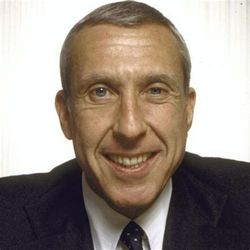
“Greed is all right, by the way. I want you to know that. I think greed is healthy. You can be greedy and still feel good about yourself.” Ivan Boesky, UC Berkeley business school commencement, May 18, 1986
Ivan Boesky grew up in Detroit, the son of William ‘Bill’ Boesky, a Russian immigrant who had Anglicised his name from Boeselsky and built a chain of small bar-restaurants called the Brass Rail across the city. The Brass Rail was respectable on paper. It was also adjacent to a string of less respectable establishments his father had once owned, and the embarrassment of that proximity stayed with Ivan for the rest of his life. He grew up wanting to be taken seriously by people who took themselves seriously.
He moved through a peripatetic education. He attended the Cranbrook prep school north of Detroit, then bounced between Wayne State, the University of Michigan, and Eastern Michigan without finishing an undergraduate degree. He spent part of one summer in Iran on a teaching exchange and came back claiming it had changed the way he thought about commerce, a claim the friends who heard it found impossible to evaluate. He eventually completed a law degree at Detroit College of Law in 1964 and married, in 1962, Seema Silberstein, the daughter of a wealthy Detroit real-estate developer.
His father-in-law, Ben Silberstein, owned the Beverly Hills Hotel and the Hotel Bel-Air among other properties. The connection placed the Boeskys, on their wedding day, into a class of money the young Ivan had only watched from outside. The family money did not pass directly to Seema’s husband, but the social access did, and the Boeskys moved to New York in 1966 with introductions to most of the senior partners on Wall Street.
The early jobs
The Wall Street career began badly. He took a job at L. F. Rothschild as a securities analyst, then moved to Kalb Voorhis, then to Edwards & Hanly, where in 1972 he was disciplined by the SEC for short-selling without sufficient capital. He was dismissed or quit, depending on the source. Friends from the period describe a man with an obvious appetite, a sharp grasp of arithmetic, and no particular patience for the social calibration that Wall Street required. He liked to win arguments. He did not like to be wrong.
In 1975 he founded his own firm. The seed capital, reported at around $700,000, came from a loan from his mother-in-law. The strategy was risk arbitrage, the relatively obscure practice of buying the stock of announced merger targets at a discount to the deal price and capturing the spread when the transaction closed.
What arbitrage actually is
In its honest form, merger arbitrage is a respectable strategy. When Company A announces it will acquire Company B for $50 a share, B’s stock typically trades at a discount, say $46, in the days that follow. The discount represents the market’s pricing of the residual risk that the deal will fall through: regulatory blocks, financing problems, the buyer’s remorse. The arbitrageur’s job is to price that risk more accurately than the market does, buy the spread, hold to closing, and capture the difference.
Boesky was, for a time, exceptionally good at this. Through the early 1980s his fund posted returns that made him a Wall Street celebrity, a fixture of the business press, and the apparent proof that arbitrage was a craft rather than a gamble. He sat at his office at 650 Fifth Avenue under a wall of clocks set to every major time zone, drank three identical glasses of tomato juice a day prepared by a personal kitchen staff, and worked sixteen-hour days on something he genuinely loved.
Merger Mania and the speech
In 1985 he published ‘Merger Mania: Arbitrage, Wall Street’s Best Kept Money-Making Secret’, a book that became a bestseller and an instruction manual. It declared, on its first page, that arbitrage ‘encourages the smooth functioning of the free market system’. The wording was, in retrospect, almost a tell.
The following May he was invited to deliver the commencement address at the University of California, Berkeley business school. He stood at the podium on May 18, 1986, and delivered the speech that defined him for the rest of his life. The exact wording was: ‘Greed is all right, by the way. I want you to know that. I think greed is healthy. You can be greedy and still feel good about yourself.’ The audience laughed and applauded. Six months later the SEC filed.
“Arbitrage prices uncertainty. Boesky had simply removed the uncertainty.”
The shortcut
The returns Boesky had been posting were not, in fact, entirely the product of skill. He had been paying for the one thing arbitrage was never supposed to require: advance knowledge of the deals he was supposed to be pricing. Dennis Levine, a young M&A banker at Drexel Burnham Lambert who had previously been at Smith Barney and Lehman, was being paid in cash for tips on deals not yet announced. Levine’s payments came through a Bahamian intermediary called Bank Leu. The mechanics took years to unwind. The economics were brutally simple: with the outcome of the deal known in advance, the ‘risk’ in risk arbitrage disappears, and the returns stop looking like genius and start looking like theft.
Levine was caught first. A Merrill Lynch broker in Caracas noticed unusual trading patterns in a colleague’s account and filed an anonymous tip. The chain led the SEC to Bank Leu, and Bank Leu, after weeks of pressure, gave up Levine. Levine, in May 1986, gave up Boesky.
Boesky Day
On November 14, 1986, the SEC publicly announced a $100 million settlement with Ivan F. Boesky & Company. Half the figure was a fine. The other half was disgorgement of profits. Boesky agreed to a lifetime bar from the securities industry, three years of federal prison, and full cooperation with prosecutors. The Dow Jones Industrial Average dropped 43.31 points by the close, the largest single-day decline of 1986. The trading floors gave the day a permanent name.
The cooperation began immediately. Boesky wore a recording device into meetings with Michael Milken over the course of 1986 and 1987, providing the federal task force with the original audio that anchored the case against Drexel. He named other names: Martin Siegel at Kidder, Boyd Jefferies at Jefferies, Carl Icahn (who was not charged), and several smaller figures. The chain of cooperation reshaped Wall Street’s view of cooperation itself. After Boesky, no one assumed a colleague at the table was not wired.
Lompoc and after
He served twenty-two months at the Federal Prison Camp at Lompoc, California, a minimum-security facility on the central coast. Seema Boesky filed for divorce while he was inside; the settlement, finalised in 1991, awarded her roughly $20 million in cash and an annual stipend of $180,000. He emerged a much quieter man. The lifetime industry bar meant he could not trade securities professionally for the rest of his life. He moved to the Bay Area for a while, then to France, then to a quiet life in Southern California, occasionally photographed at restaurants in West Hollywood, almost never quoted.
He died on May 20, 2024, in West Hollywood, aged 87. The obituaries used the words ‘greed is good’ in nearly every headline, even though he had never quite said them. The film Wall Street had handed Oliver Stone a tighter version of the Berkeley line, and the tighter version became the caption of an entire decade. Boesky had never been able to outrun it.
The tragedy, in a strict financial sense, was that the underlying strategy had been legitimate. He had not needed to cheat to be excellent. He cheated anyway, and in doing so he handed the prosecutors the single thread that unwound Wall Street’s golden decade.
Career timeline Key moments
- 1937 Born in Detroit, Michigan, the son of William 'Bill' Boesky, a Russian immigrant who ran a chain of bar-restaurants called the Brass Rail.
- 1954 Spends part of a summer in Iran on an exchange programme, an unusual posting that he would later cite as the first time he saw a market work without rules.
- 1962 Marries Seema Silberstein, daughter of Ben Silberstein, a Detroit real-estate developer who owned the Beverly Hills Hotel and the Hotel Bel-Air.
- 1964 Receives a JD from Detroit College of Law after stints at four other universities, a peripatetic academic record he never fully explained.
- 1966 Moves to New York with Seema and takes a job at L. F. Rothschild as a securities analyst.
- 1975 Founds Ivan F. Boesky & Company with $700,000 in seed capital from his mother-in-law, specialising in risk arbitrage.
- 1985 Publishes 'Merger Mania: Arbitrage, Wall Street's Best Kept Money-Making Secret'. The book becomes a bestseller and an instruction manual.
- 1986 Tells UC Berkeley business school graduates on May 18 that 'greed is healthy'. Six months later he agrees to settle SEC insider trading charges.
- 1986 On November 14, the SEC publicly announces the $100 million settlement. Wall Street remembers the day as 'Boesky Day'.
- 1987 Begins cooperating with federal investigators, including wearing a recording device into meetings with Michael Milken and others.
- 1988 Sentenced to three years in federal prison and barred for life from the securities industry.
- 1990 Released from the Federal Prison Camp at Lompoc, California, after twenty-two months.
- 1991 Divorces Seema Boesky after a settlement reported at roughly $20 million plus an annual stipend.
- 2024 Dies in West Hollywood, California, on May 20, aged 87. The obituaries used the words 'greed is good' in nearly every headline.
In their own words Selected quotes
-
“Greed is all right, by the way. I want you to know that. I think greed is healthy. You can be greedy and still feel good about yourself.”
Ivan Boesky, UC Berkeley commencement, May 18, 1986 -
“Arbitrage is the business of identifying mispricings and capturing them before they close. The risk is always whether the deal closes.”
Ivan Boesky, 'Merger Mania', 1985 -
“I'm just a businessman who loves working.”
Ivan Boesky, Fortune profile, 1984 -
“All my life I have been an arbitrageur. I bought what was cheap and sold what was expensive.”
Ivan Boesky, 1987 plea statement -
“There is nothing more dangerous than a man with a phone, a Bloomberg, and a lawyer he no longer trusts.”
Ivan Boesky, attributed after his cooperation began
Notable and surprising Things you might not know
- His father William Boesky ran a chain of bar-restaurants called the Brass Rail across Detroit; the family was middle-class but the restaurants were strip-club-adjacent and the elder Boesky was, by all accounts, an embarrassed self-made man.
- Ivan attended five universities before finally completing his JD at Detroit College of Law in 1964. He never finished an undergraduate degree.
- He married Seema Silberstein in 1962. Her father, Ben, was a Detroit real-estate developer who owned the Beverly Hills Hotel, the Hotel Bel-Air, and a stretch of Wilshire Boulevard. The capital that founded Ivan F. Boesky & Company in 1975 came from Seema's mother.
- He worked sixteen-hour days from his office at 650 Fifth Avenue, with a wall of clocks set to different time zones and a personal kitchen staff that produced him three identical glasses of tomato juice a day.
- His 1985 book 'Merger Mania' contained, on page one, the unironic line: 'Arbitrage encourages the smooth functioning of the free market system.' Critics later pointed out that the manuscript had been ghost-edited and that some examples were drawn from deals he had traded on inside information.
- The November 14, 1986 announcement of his $100 million settlement triggered a Dow Jones drop of more than 43 points before the close, the largest one-day decline of the year. Traders called it 'Boesky Day' for the rest of the decade.
- He wore a body-wire to meetings with Michael Milken in 1986 and 1987, recordings that became central evidence in the federal case against Drexel. The Milken family has never forgiven him.
- Director Oliver Stone has said the Gordon Gekko 'greed is good' speech in the 1987 film Wall Street was a tightened paraphrase of Boesky's actual Berkeley speech, in which the actual words were 'greed is healthy.' The film coarsened the line and made it permanent.
The Playbook How Ivan built it
- 01 Legitimate merger arbitrage is a real edge. The job is pricing the risk that a deal closes.
- 02 An information advantage is only an advantage while it remains legal.
- 03 One cooperating witness can unravel an entire network of friends.
- 04 The strategy was sound. The shortcut destroyed both the man and his reputation.
Published January 30, 2025