John C. Malone
The Cable Cowboy
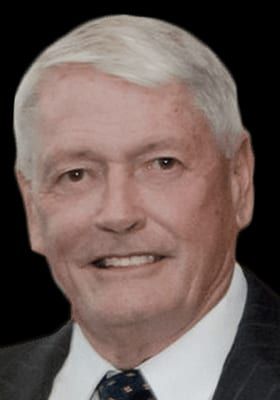
“I'd rather have a 20 percent tax-deferred return than a 30 percent taxable one.” John C. Malone
There is one investor alive whose understanding of the United States tax code and corporate-structure law has produced more wealth than almost any operating insight in the same period. His name is John Malone, and the cable industry is his monument.
If you have ever paid a cable bill in the United States, you have paid a small monthly contribution to a structure Malone designed. If you have ever held shares of Discovery, Liberty Media, Sirius XM, Charter, Formula One, Lions Gate, or the Atlanta Braves, you have held a structural artefact of one of his transactions. He has been doing this continuously for fifty years.
A PhD in operations research
John Malone was born in Milford, Connecticut in 1941. He read mathematics and electrical engineering at Yale and operations research at Johns Hopkins, earning his PhD in 1969. He spent four years at McKinsey, then moved to General Instrument’s Jerrold division, which built much of the early cable equipment. In 1973, at 32, he was hired as the president of Tele-Communications Inc (TCI), a struggling Denver cable company with about 100,000 subscribers and roughly $19 million of debt that nobody wanted to refinance.
He had a thesis. The cable industry was a long-life asset business. Cable franchises produced predictable monthly bills from a sticky subscriber base. The standard GAAP earnings of cable companies looked terrible because the equipment depreciation was front-loaded, but the actual cash these businesses produced was substantial and growing. He believed the valuation framework used by Wall Street to price cable companies was wrong, that the right metric was the cash these systems threw off before depreciation, and that anyone who could rationalise their thinking around that metric could buy almost the whole industry.
He spent twenty-five years proving the thesis. By the late 1990s, TCI had grown through approximately 482 acquisitions to become the largest cable operator in the United States. In 1999 he sold the entire company to AT&T for $54 billion in stock, at the very top of the late-1990s telecom bubble. The exit timing is, in retrospect, one of the most extraordinary M&A trades of the postwar era.
The invention of EBITDA
The single innovation that made the cable rollup possible was conceptual. The cable business has very high depreciation expense (you constantly write down the network you have already built), so reported earnings can be near zero or even negative for years even as the business is generating substantial cash. Malone’s analysts at TCI began, in the late 1970s, reporting earnings before interest, taxes, depreciation, and amortisation as the operationally meaningful metric. He used EBITDA to value targets and to negotiate with bond buyers, and he persuaded the bond buyers to lend against it.
The metric went on to become the universal valuation language of the private equity industry. Almost every leveraged buyout done in the United States since 1990 has been priced as a multiple of EBITDA. Malone did not invent the calculation, but he invented the industry-wide practice of using it as the principal valuation metric, and the cable industry was the laboratory.
Tracking stocks and the architecture of value
The second innovation was structural. In 1991, with TCI now operating both cable systems and a growing collection of stakes in programming networks, Malone created Liberty Media as a separately listed company holding the programming side. The separation let the market value the two businesses on different multiples. Cable distribution traded as a slow, debt-funded utility. Programming networks like Discovery and BET traded as growth assets. The combined market capitalisation of the two pieces was higher than the market capitalisation of the single combined entity it had emerged from.
The discovery was repeatable. Over the next thirty years Malone executed this manoeuvre dozens of times, sometimes using full spin-offs, sometimes using “tracking stocks” (a class of share that economically tracks the performance of one subsidiary inside a holding company without legally separating it), and sometimes using complex partnership structures. Liberty Media and its successor entities have produced separately listed securities tied to Charter Communications, Sirius XM, Live Nation, Lions Gate, Formula One, the Atlanta Braves, and roughly a dozen other operating assets.
In each case the rationale is the same. Different businesses deserve different multiples. Wrapping them inside one consolidated entity forces the market to apply a blended (and therefore wrong) multiple. Separating them lets the market price each one on its own merits.
Tax discipline as a design principle
The third innovation was tax-aware. Malone’s reputation rests substantially on his willingness to design every transaction around the tax outcome. He will frequently accept structurally awkward arrangements (Reverse Morris Trust spin-offs, dual-class shares, Section 355 splits, partnership conversions) that minimise corporate or shareholder tax leakage at the cost of greater optical complexity.
The widely quoted line he uses to explain this is also the one a generation of investment bankers has been taught to keep in their heads: he would rather have a 20 percent tax-deferred return than a 30 percent taxable one. The math compounds. Over a 30-year hold, the tax-deferred return ends up worth substantially more in absolute terms because no portion of the return has been removed annually to pay tax.
This is the second reason Warren Buffett has said publicly that he does not own a Malone company. The first reason is balance-sheet complexity. The second is that Buffett’s preferred businesses pay tax conventionally and Malone’s deliberately do not.
The land
By the 2010s, with most of his cable wealth crystallised, Malone began the second great accumulation of his life. He bought land. As of the mid-2020s he owns approximately 2.2 million acres of American real estate, more than any other private individual in the country. The holdings are concentrated in Wyoming, Maine, New Mexico, and Colorado, and are managed largely as working timber and cattle operations.
The land is the obverse of the cable empire. Cable was a high-leverage, complex-structure, financially engineered business. The land is direct, unleveraged, low-velocity, and structurally simple. The pattern is recognisable. Malone is doing with timber what Daniel Ludwig did with shipping: accumulating a long-duration physical asset class and intending to hold it for a generation.
What the operator should take
The Malone playbook is unusually transferable to anyone willing to learn the structural side of M&A.
Pick an industry with sticky, recurring revenue from contracted customers.
Buy slowly, persistently, and in volume. Do not pay a premium for size; let scale come from the cumulative effect of small disciplined acquisitions.
Use EBITDA, not earnings, to evaluate and finance targets.
Design every transaction to minimise tax leakage. The 20-year compounded difference is substantial.
Use separation structures (spin-offs, tracking stocks, partnership conversions) to let the market value each piece on its own merits.
Hold the assets for decades. Time, leverage, and structural arbitrage do most of the actual work.
The Malone career is the closest thing the modern era has produced to a worked example of capital-structure mastery applied across an entire industry. The cable bills are still arriving every month. The pieces are still being shuffled. He is still in the office.
Career timeline Key moments
- 1941 Born in Milford, Connecticut. Father is an electrical engineer; the family is middle-class.
- 1963 Graduates from Yale with a double major in electrical engineering and economics.
- 1969 Receives a PhD in operations research from Johns Hopkins. Joins McKinsey as a consultant.
- 1973 Joins Tele-Communications Inc (TCI), then a small Denver-based cable operator, as president. He is 32 years old.
- 1973 to 1999 Builds TCI through approximately 482 acquisitions of small local cable systems. By the mid-1990s TCI is the largest cable company in the United States.
- 1981 Becomes CEO of TCI. Refines and popularises the use of EBITDA as the valuation metric for cable, because the conventional GAAP earnings number understated the cash businesses were actually generating.
- 1991 Spins off Liberty Media as TCI's programming arm. Liberty becomes the holding entity for stakes in networks like Discovery, Black Entertainment Television, and dozens of others.
- 1999 Sells TCI to AT&T for $54 billion in stock. Retains Liberty Media as a separate public company.
- 2001 AT&T spins off TCI's cable assets into AT&T Broadband, which is then acquired by Comcast in 2002. Malone's TCI shareholders end up as the largest non-Roberts shareholders of modern Comcast.
- 2005 to present Uses Liberty Media as the architectural template for a long series of tracking-stock structures, splits, spin-offs, and capital reshufflings across Discovery, Sirius XM, Live Nation, Lions Gate, Charter Communications, Formula One, and Atlanta Braves Holdings.
- 2020s Continues active as chairman of Liberty Media and the Malone-family land holdings. Is widely recognised as the most sophisticated capital-structure architect of his generation.
In their own words Selected quotes
-
“I'd rather have a 20 percent tax-deferred return than a 30 percent taxable one.”
John C. Malone -
“Cash flow is what matters. Earnings are an accounting opinion.”
John C. Malone, popularising the use of EBITDA in the cable industry -
“If you understand the tax code well enough, you can buy almost any company you want and pay no tax on the gain.”
John C. Malone, in interview -
“Buy or be bought. There is no third option in a consolidating industry.”
John C. Malone, frequent shareholder-letter refrain -
“Tracking stocks let us let the market price each piece of the business separately. The math always works in our favour.”
John C. Malone, on Liberty's structural innovations
Notable and surprising Things you might not know
- He holds an undergraduate degree from Yale and a PhD in operations research from Johns Hopkins. He is one of the most technically trained executives in modern American business.
- He effectively invented the modern usage of EBITDA. The cable industry needed a valuation metric that captured the cash-generating power of long-lived depreciating assets, and Malone's analysts at TCI started reporting it in the late 1970s. The metric was eventually adopted as standard across the entire private-equity industry.
- Warren Buffett has said publicly that he does not own a Malone company because the balance sheets are too complex for him to understand. This is widely interpreted in the investment community as a compliment.
- He pioneered the 'tracking stock' structure: a class of public shares that tracks the performance of a specific operating division inside a holding company without legally separating the division. Liberty Media has used this structure dozens of times.
- He sold TCI to AT&T in 1999 for $54 billion in stock at the absolute peak of the late-1990s telecom bubble. The timing is generally considered one of the great M&A exits in American history.
- He owns roughly 2.2 million acres of American land, more than any other private individual in the country. The holdings are concentrated in Wyoming, Maine, New Mexico, and Colorado, and are managed largely as working ranches and timber operations.
- His daily reading is reported to be 60 to 80 percent capital-allocation and balance-sheet analysis. He is uninterested in the operational details of programming, brands, or content. His self-described role is structural, not editorial.
The Playbook How John built it
- 01 Tax is a cost like any other. Most operators leave the cost on the table. The disciplined ones structure every deal around it.
- 02 Tracking stocks, holding companies, dual-class shares, and partnership structures are not academic curiosities. They are the tools that turn one good business into five separately tradeable ones.
- 03 Cash flow is the unit of value, not earnings. EBITDA exists because of Malone, who needed a metric that captured what his businesses actually produced after the depreciation games.
- 04 Debt is cheap if it is structured against contracted long-life cash flows. Cable bills, like oil charters, come in every month.
Published May 15, 2026