Michael Milken
The Junk Bond King
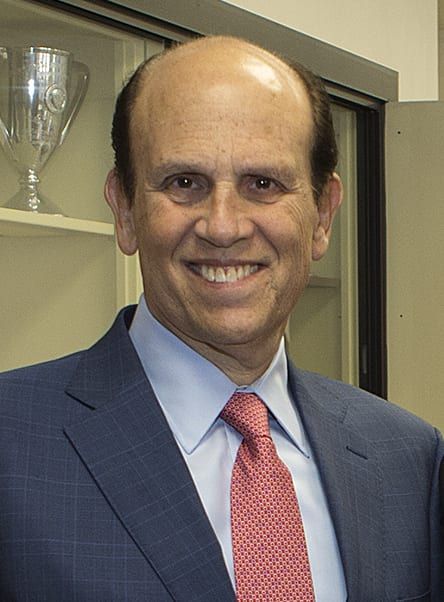
“Michael didn't just sell bonds. He financed an entire revolution.” A former Drexel colleague
Michael Milken arrived at Drexel Firestone in 1969 with an MBA from Wharton, a job offer for $25,000 a year, and a thesis he had been carrying since his undergraduate days at Berkeley. He had read a 1958 study by W. Braddock Hickman called Corporate Bond Quality and Investor Experience. Hickman had done the painstaking work of measuring what actually happened to low-rated corporate bonds over four decades, and the result was counterintuitive: a diversified portfolio of so-called junk paid more in yield than it lost to defaults, by a margin so wide it amounted to a structural mispricing.
Wall Street ignored Hickman because Wall Street did not buy low-rated debt. Pension funds, life insurers, and trust departments were forbidden by their own internal rules from holding bonds rated below investment grade. The supply was tiny, the demand was nonexistent, and the market was a curiosity at the back of every bond desk. Milken read Hickman and saw a continent that nobody had bothered to map.
The desk
For his first two years at Drexel he was a researcher in the firm’s bond department in Philadelphia, writing memos that no senior partner read. By 1971 he had talked the firm into giving him a trader’s seat. He started running money out of a small desk on the trading floor, using Drexel’s own capital. The returns were too good to argue with. By the mid-1970s the high-yield desk had become the firm’s most profitable single business, and Milken had become the figure around whom the whole place rotated.
In 1978 he made an unusual request. He wanted to move the entire operation to Beverly Hills. The official rationale was lifestyle. The actual rationale was the time zone. Working California hours meant his traders arrived at 4:30 a.m. Pacific time, three hours before the East Coast bond market opened, and that head start let him price the morning’s quotes before anyone in New York had finished their commute. Drexel agreed. The desk moved into a building at 9560 Wilshire Boulevard, and the X-shaped trading floor became one of the most photographed objects in finance.
The machine
By the mid-1980s the Beverly Hills operation was the engine of the entire raider economy. Carl Icahn, Ronald Perelman, T. Boone Pickens, Nelson Peltz, William Farley, Saul Steinberg: they all came to Milken for financing, and they kept coming because he could deliver something his competitors could not. Drexel invented the ‘highly confident letter’, a written assurance that the firm believed it could raise a stated sum of debt for a takeover. In practice the letter was treated as a commitment. Targets saw a bid backed by it and capitulated.
The real innovation underneath the letter was the buyer network. Anyone could underwrite a risky bond. Milken had spent a decade building a captive market to sell it into: thrifts run by his clients, insurance companies he had advised, mutual funds his own deals had created. When a raider needed a billion dollars, the call was not a sales pitch. It was a coordination problem.
“He could raise a billion dollars in a phone call. That was not a metaphor.”
In 1987 his personal compensation was roughly $550 million. The firm’s own accountants reportedly flagged the figure as a typo before sign-off. To put the number in perspective: it was more than the annual profit of any commercial bank in California, and it went to one person who held no title higher than head of a department.
The Predators’ Ball
Every spring Drexel hosted an institutional conference at the Beverly Hilton called the High-Yield Bond Conference. Officially it was a marketing event for institutional buyers. In practice it was the annual convening of the entire 1980s takeover economy. Raiders met their lenders. Lenders met their lawyers. New deals were sketched on cocktail napkins in the lobby bar. The journalist Connie Bruck attended and gave it a permanent nickname in her 1988 book: the Predators’ Ball.
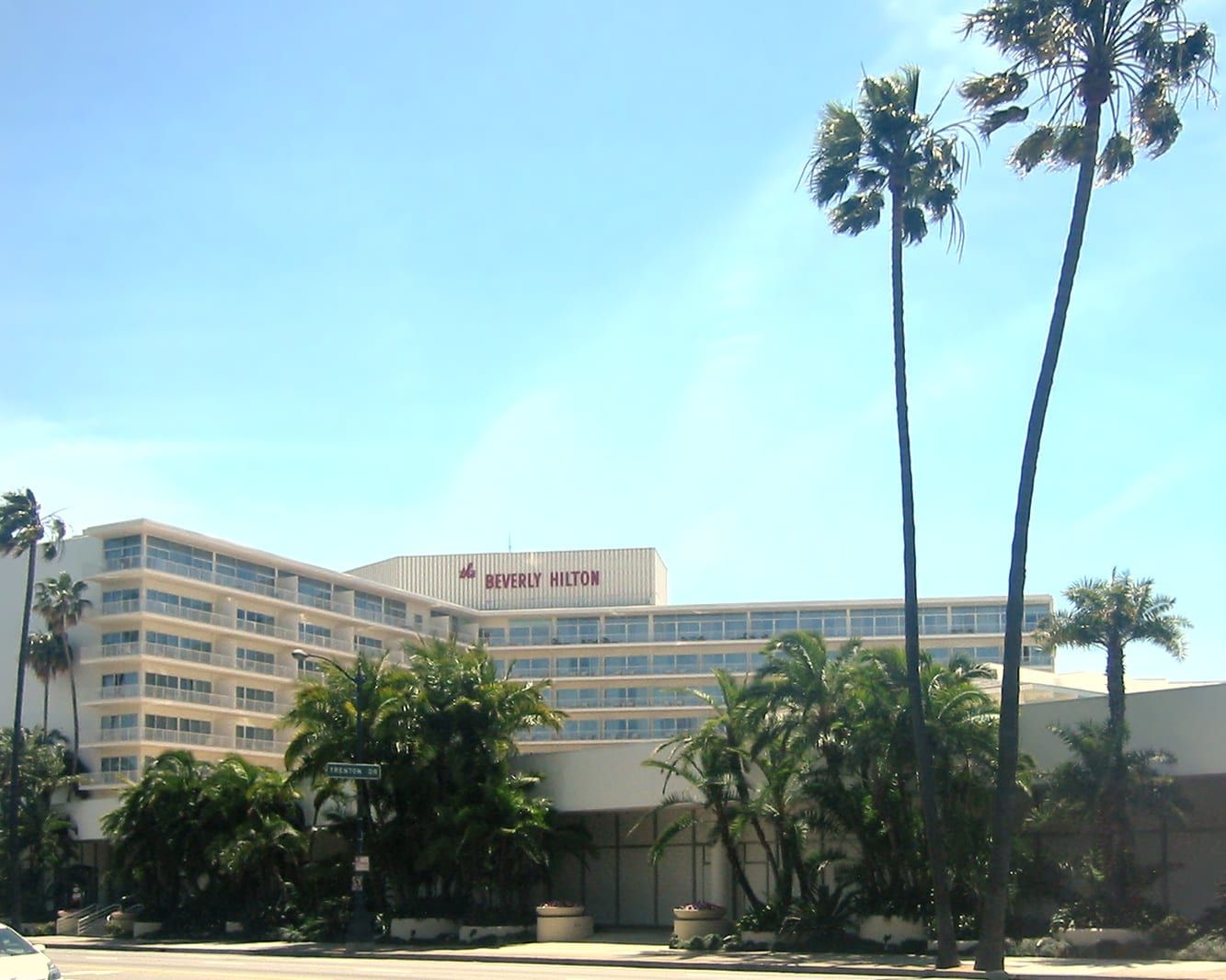
The conference made the marketplace physical. A raider could arrive in Los Angeles on a Sunday with an idea and leave on a Thursday with verbal commitments for several billion dollars in financing. That density of relationships was the real franchise, and it had one address.
The fall
The same density made Milken vulnerable. When the federal investigation into Wall Street insider trading reached Ivan Boesky in late 1986, Boesky cooperated, and the trail led directly to Drexel. Investigators built a case alleging stock parking, manipulative trading, and a long pattern of favours exchanged between Milken’s desk and Boesky’s arbitrage operation.
In March 1989 a grand jury returned a 98-count indictment under the RICO statute, the racketeering law more commonly applied to organised crime. Milken faced the possibility of a sentence measured in decades. After eighteen months of legal warfare he agreed to plead guilty to six counts, all of them technical securities and tax violations and none of them insider trading. He paid $600 million in fines and disgorgement and accepted a ten-year sentence. Judge Kimba Wood later reduced the sentence to two years after his cooperation with prosecutors investigating other targets.
Drexel did not survive him. Starved of its franchise and unable to roll its own short-term funding, the firm filed for bankruptcy in February 1990, the largest collapse on Wall Street between 1929 and Lehman.
Pleasanton and after
Milken served twenty-two months at the Federal Prison Camp in Pleasanton, California. While inside he was diagnosed with advanced prostate cancer and given an 18-month prognosis. He survived it, and the experience reshaped the second act of his life. On release he was barred for life from the securities industry, which meant he was free to do anything except finance.
He founded the Milken Institute in 1991, then a series of medical philanthropies focused on prostate cancer, melanoma, and pancreatic research, putting hundreds of millions of his own dollars into the field. The Milken Institute Global Conference in Beverly Hills became a fixture of the policy calendar, with the kind of attendee list that draws Treasury Secretaries and central bank governors. Henry Paulson reportedly called it “Davos with better weather”. In February 2020, President Trump granted him a full presidential pardon, citing the cancer-research work.
Legacy
It is easy to read the story as a morality tale, and the criminal counts were real. But the financial instrument outlived its creator’s disgrace. The high-yield market Milken built did not vanish with Drexel. It became a permanent, multi-trillion-dollar fixture of global finance, the standard way mid-sized companies, leveraged buyouts, and entire private equity portfolios are funded today. KKR, Blackstone, Carlyle, Apollo, and every other modern sponsor descends, in financing terms, from the desk at 9560 Wilshire.
He was pardoned in 2020. The market he invented never needed one.
Career timeline Key moments
- 1946 Born on Independence Day in Encino, California, the son of an accountant who let his teenage son keep the books for the family clients.
- 1968 Graduates from UC Berkeley after reading W. Braddock Hickman's study on the surprising performance of low-rated corporate bonds.
- 1970 Finishes his Wharton MBA and joins Drexel Firestone (later Drexel Burnham) as a researcher in the bond department in Philadelphia.
- 1971 Persuades Drexel to let him trade high-yield bonds and starts running money for the firm out of a small back-office desk.
- 1978 Convinces Drexel to move the entire high-yield operation to Beverly Hills so he can run the desk on California time and beat the East Coast open.
- 1983 Hosts the first 'High-Yield Bond Conference' at the Beverly Hilton, the gathering Connie Bruck will later christen 'The Predators' Ball'.
- 1986 His personal compensation passes $295 million, more than the entire profit of most public American banks that year.
- 1987 Earns roughly $550 million in a single year. Drexel's own accountants initially flag the number as a typo.
- 1989 Indicted on 98 counts of racketeering and securities fraud under the RICO statute.
- 1990 Pleads guilty to six counts, agrees to pay $600 million in fines, and is sentenced to ten years (later reduced to two).
- 1991 Diagnosed with advanced prostate cancer while incarcerated at the Federal Prison Camp in Pleasanton, California.
- 1993 Released from prison and barred for life from the securities industry. Founds the Milken Institute the following year.
- 2020 Receives a full presidential pardon from Donald Trump on February 18, citing his philanthropic work in cancer research.
In their own words Selected quotes
-
“The bond market is the largest, most important market in the world.”
Michael Milken -
“It is not money that creates jobs and prosperity. It is human capital, married to financial capital, that drives an economy.”
Michael Milken, in interview -
“Capital is more available than ever, and it is also more democratic than ever.”
Michael Milken, Milken Institute speech -
“I have always tried to find what some have called 'inefficiencies' in the credit markets.”
Michael Milken, in 'Faster Cures' essay -
“All the great things that have happened in business have been built on long-term thinking.”
Michael Milken, in interview
Notable and surprising Things you might not know
- His foundational insight came from W. Braddock Hickman's 1958 study Corporate Bond Quality and Investor Experience, which Milken read at Berkeley and used as the empirical bedrock for the entire junk-bond market.
- He famously worked a trader's day from 4:30 a.m. Pacific time to catch the East Coast bond market open, sometimes wearing a miner's headlamp on the commuter bus in from his San Fernando Valley home.
- The Drexel high-yield desk in Beverly Hills was built in an X-shape, with Milken at the centre, so that any conversation among traders had to pass through him.
- He invented the 'highly confident letter', a Drexel commitment to raise a stated amount of debt for a takeover, which was effectively a personal guarantee in a footnote.
- His 1987 compensation of roughly $550 million was the largest single-year payout to any executive in U.S. history at the time and would not be matched for over a decade.
- The 'Predators' Ball' was an annual bond conference Drexel held at the Beverly Hilton, where raiders, savings-and-loan executives, and institutional bond buyers met to size each other up. The journalist Connie Bruck gave it the name in her 1988 book.
- His brother Lowell Milken was named as an unindicted co-conspirator in the original case but never charged. Michael's plea agreement explicitly carved Lowell out of any charges.
- The Milken Institute now hosts an annual Global Conference in Beverly Hills that has been called 'Davos with better weather' by attendees including a young Treasury Secretary Henry Paulson.
The Playbook How Michael built it
- 01 Markets misprice unfamiliar risk. Find the asset class everyone refuses to study.
- 02 A diversified portfolio of so-called junk can be safer than a single investment-grade name.
- 03 Whoever can raise a billion dollars on the phone controls the deal.
- 04 The line between aggressive and illegal is much thinner than it looks from the inside.
Published January 18, 2025