T. Boone Pickens
The Oilman Raider
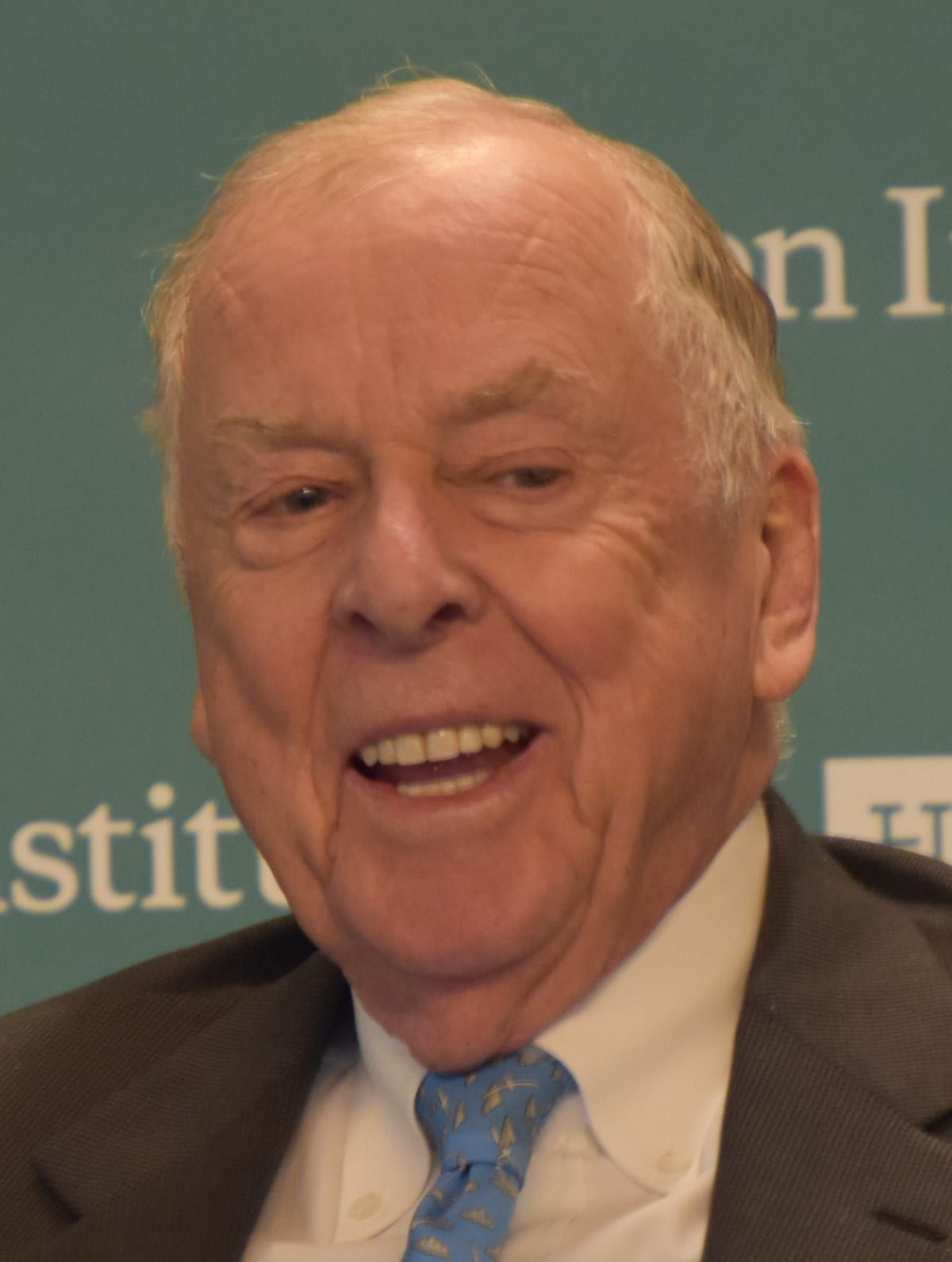
“The reason for the takeover boom is simple. Managements are not doing their job.” T. Boone Pickens, U.S. House testimony, 1985
T. Boone Pickens was born in 1928 in Holdenville, Oklahoma, an old oil town in the Seminole Nation. His father, Tom Boone Pickens Sr., made his living scouting oil and gas leases for the small wildcatters operating across eastern Oklahoma. His mother, Grace, would run the local World War II gasoline rationing board out of the family home, an arrangement that gave the young Pickens an unusually close view of how arbitrary the difference could be between a barrel of oil priced for an open market and one priced by a bureaucracy.
He grew up under modest circumstances. His father once lost the family Plymouth in a poker game and his mother sold the family piano to recover the next month’s rent. The lessons stuck. Pickens later said his attitude to money had been formed before his fourteenth birthday: spend less than you make, count it carefully, do not assume anyone owes you anything.
The first business was a paper route. At twelve, after the family had moved to Amarillo, Texas, he bought out the customer lists of two neighbouring paper boys and consolidated their routes into his own. Inside a year he had grown from 28 customers to roughly 160 and was earning more than most of his classmates’ fathers. He would later describe the episode in speeches as his first roll-up. It was also the first time he noticed that two unprofitable businesses, run together by someone who actually showed up, could be substantially more valuable than either had been alone.
A short corporate career
He took a geology degree from Oklahoma A&M in 1951 and joined Phillips Petroleum in Bartlesville. The job lasted three years. By his own account he found the company sclerotic, the meetings interminable, and the prevailing attitude one of going along to get along. He resigned in 1954 with a letter that named names. Twenty years later he would launch one of his most famous raids against the same Phillips.
In 1956 he founded Petroleum Exploration Inc. with $2,500 of personal capital and a borrowed two-door sedan, scouting leases across the Texas Panhandle and assembling pools of investors to fund the drilling. In 1964 he renamed the firm Mesa Petroleum and took it public on the American Stock Exchange. By 1969 Mesa was acquiring Hugoton Production Company, an east-Kansas gas producer four times its own size, in what became the first of Pickens’ large transformative deals.
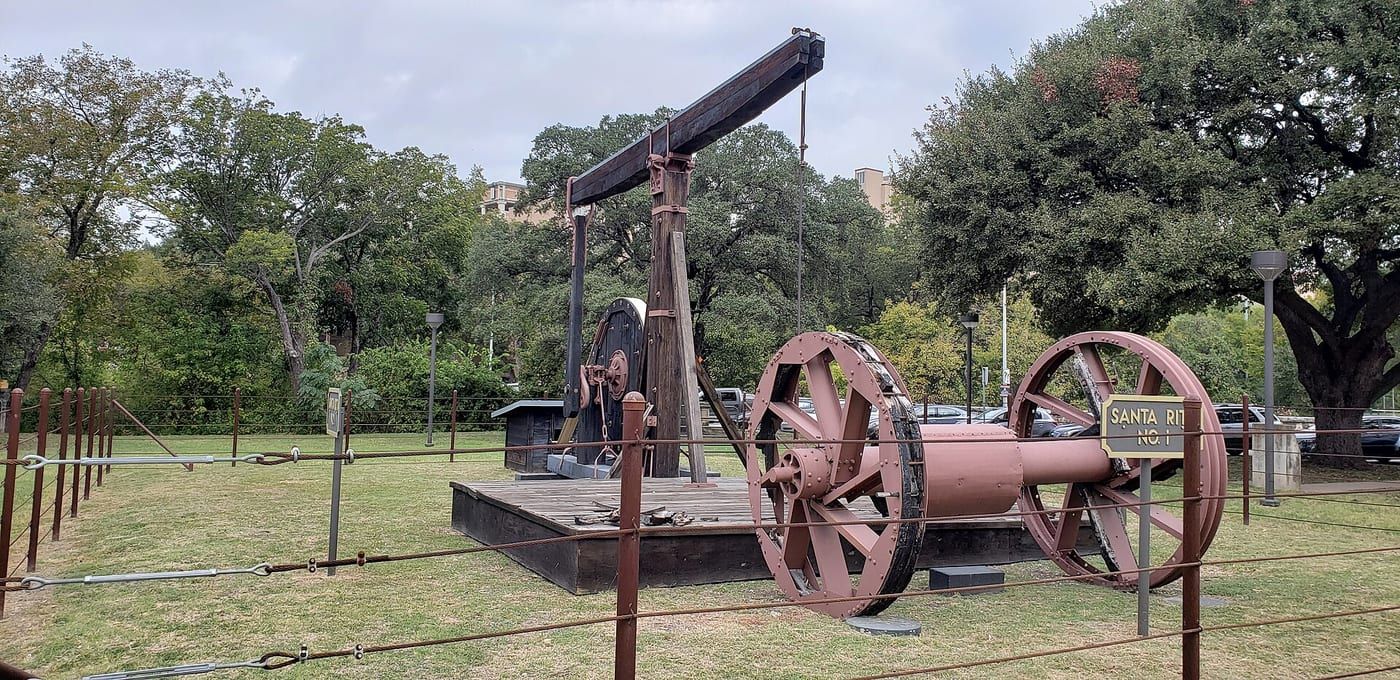
Drilling on Wall Street
Through the 1970s Mesa grew into a substantial independent. Pickens was a serious operator, but he was also a meticulous reader of public filings, and in the late 1970s he began to notice something that changed the rest of his career. The major American oil companies were trading on the New York Stock Exchange for far less than the proved reserves on their books. An investor could buy a barrel of crude in the ground, fully developed and producing, for a fraction of what it cost to discover one. The cheapest exploration program in the country was a brokerage account at Smith Barney.
He called it “drilling for oil on Wall Street”, and Mesa began to do exactly that. The 1982 attempt at Cities Service ended in defeat for Mesa, with Occidental Petroleum riding in as a white knight, but the trade itself was profitable. The 1984 attempt at Gulf Oil ended with Gulf selling itself to Chevron for $13.2 billion, then the largest corporate merger in American history.
The Gulf raid
Gulf was roughly twenty times the size of Mesa, which was the point. Pickens assembled an investor group, accumulated several percent of the stock through open-market purchases and unsolicited bids for blocks, and then began to publish his own analysis of the company’s reserves and capital structure. The press conferences were televised. The proxy materials were written in a folksy, Texas-inflected English that the financial reporters quoted approvingly. He proposed creating a royalty trust that would distribute Gulf’s reserves to shareholders directly, a structure that would have unlocked tens of billions of dollars and effectively ended the company as a going concern.
Gulf’s board refused. The directors hated the idea of being bullied by an Oklahoman roughly a twentieth their size, and they hated the royalty trust still more. To escape him, they sold the entire company to Chevron, then known as Standard Oil of California, in a transaction that closed in March 1984. Pickens never got Gulf. His investor group walked away with a reported profit of more than $500 million on a position that had cost them well under a billion to assemble. He had lost the company and won the trade.
“He lost every company he ever raided. He rarely lost money doing it.”
The shareholder argument
What made Pickens dangerous, more than the capital, was the rhetoric. He cast himself not as a predator but as a champion of the ordinary shareholder against an entrenched and underperforming management class. He testified before Congress. He wrote opinion pieces in The Wall Street Journal. He founded the United Shareholders Association in 1986, a Washington lobby that pushed against staggered boards, against poison pills, and for the principle that a board’s first duty was to the people who actually owned the company.
It was self-serving. It was also frequently correct, and that combination made it almost impossible to answer in public. The Phillips Petroleum raid in 1984 forced his old employer to restructure on terms that distributed billions to existing shareholders. The Unocal raid in 1985 ended with a Delaware court decision that authorised modern poison pills and effectively closed the door on the kind of run-up Pickens had been doing. He had reformed corporate America by terrifying it.
The Mesa decline and a second act
Mesa’s own balance sheet eventually betrayed him. The leverage he had used to fund the raids worked beautifully when natural gas prices were rising, and the prices were not. Through the late 1980s and into the 1990s the firm struggled under its debt load. In 1996 the board, frustrated by years of falling stock and growing losses, pushed him out as chief executive. He was 68 and, by his own description, broke and humiliated.
The second act began the next year. In 1997 he founded BP Capital Management, a small commodities-focused hedge fund, with a few million dollars of personal stake and the conviction that natural gas was undervalued. He was right. Between 2000 and 2007 the fund posted returns that turned him into a billionaire for the first time. He gave interviews from his ranch outside Pampa, Texas, on a hand-tooled phone, looking and sounding exactly like a man who had been waiting for vindication for a decade and had finally been handed it.
The Pickens Plan and the legacy
In July 2008, with oil at $140 a barrel and gasoline above $4, he launched the Pickens Plan, a publicly campaign for an American energy policy built on natural gas and wind. He bought $58 million in television advertising in the first month alone. The plan never became law, but it pushed natural gas vehicles, wind transmission corridors, and energy independence into the political conversation in a way no individual fortune had ever managed before.
He kept giving to Oklahoma State University. By his death his cumulative gifts there exceeded $650 million, more than any single living donor had ever given to a public university in the United States. The football stadium in Stillwater carries his name. So does the business school’s main building, the athletic centre, and a substantial slice of the campus’s modern footprint.
He lost much of his fortune again in his final years, after a string of bad bets on the energy markets and an expensive divorce. He died in Dallas on September 11, 2019, aged 91. The last public photograph showed him sitting in his Mesa Vista Ranch office, looking at a flatscreen full of gas prices, a notebook open on his knees.
Career timeline Key moments
- 1928 Born in Holdenville, Oklahoma, the only child of Tom Boone Pickens Sr., a small-town oil-lease scout, and Grace Molonson Pickens.
- 1940 As a 12-year-old in Amarillo, Texas, he buys out two neighbouring paper routes and expands his own from 28 customers to roughly 160, what he later called his first lesson in 'roll-ups'.
- 1951 Graduates from Oklahoma A&M (now Oklahoma State University) with a degree in geology and takes a job at Phillips Petroleum in Bartlesville.
- 1954 Quits Phillips after three years, citing what he called 'a culture of going-along' that drove him to a series of confrontations with his supervisor.
- 1956 Founds Petroleum Exploration Inc. with $2,500 of his own money and a borrowed car, scouting leases across the Texas Panhandle.
- 1964 Renames the firm Mesa Petroleum and takes it public on the American Stock Exchange.
- 1969 Acquires Hugoton Production Company, four times Mesa's own size, in a deal that establishes him as a serious independent.
- 1982 Launches the unsolicited bid for Cities Service that puts him on the financial press's permanent map.
- 1984 Raids Gulf Oil, forcing the company into a $13.2 billion sale to Chevron in March, then the largest corporate merger ever completed.
- 1985 Founds the United Shareholders Association, a Washington lobby for shareholder voting rights and against staggered boards.
- 1996 Forced out as CEO of Mesa after years of struggle with debt and depressed natural gas prices.
- 1997 Founds BP Capital Management, the commodities hedge fund that becomes the vehicle for his second fortune.
- 2008 Launches the Pickens Plan to push American energy policy toward natural gas and wind.
- 2019 Dies in Dallas on September 11, aged 91, with the public estimate of his lifetime giving to Oklahoma State alone over $650 million.
In their own words Selected quotes
-
“A fool with a plan can beat a genius with no plan.”
T. Boone Pickens -
“I've always said it's easier to take a tank than it is to build one.”
T. Boone Pickens, on raiding versus drilling -
“Be ready to act. There are no perfect deals.”
T. Boone Pickens -
“I have a way of approaching things in a businesslike, no-nonsense fashion. I believe in keeping your eye on the prize and not getting distracted.”
T. Boone Pickens, in interview -
“If I had a dime for every time I said 'I'm getting old', I'd be a billionaire.”
T. Boone Pickens, on his late-life comeback
Notable and surprising Things you might not know
- His first business lesson was a literal roll-up. At twelve in Amarillo, Texas, he bought out the customers of two neighbouring paper boys and ran the merged route on his bicycle. By the end of the year he had grown from 28 customers to roughly 160.
- His father was a small-town oil-lease scout who lost the family Plymouth in a poker game; his mother ran the local World War II gasoline rationing board. The combination of scouting deals and rationing rules followed him for life.
- He quit Phillips Petroleum in 1954, telling friends he was tired of supervisors who 'said the right things and did nothing'. Twenty years later he would launch one of his most famous raids against Phillips itself.
- Mesa Petroleum was founded with $2,500 of his own money and a borrowed two-door sedan he used to drive between leases across the Texas Panhandle.
- The 1984 raid on Gulf Oil ended with Gulf selling itself to Chevron for $13.2 billion, the largest corporate merger in American history up to that point. Pickens never owned Gulf, but his investor group walked away with a profit reported at over $500 million.
- After Mesa pushed him out in 1996, he started over with a commodities hedge fund called BP Capital and reportedly turned a few million dollars of personal stake into more than a billion by 2007.
- His giving to Oklahoma State University totalled more than $650 million by his death, including the funds for the renovated football stadium that carries his name.
- He was married five times. His last wife, Toni Brinker Pickens, was a former Dallas Cowboys cheerleader and a noted philanthropist in her own right.
The Playbook How T. built it
- 01 Sometimes the cheapest assets in an industry trade on the stock exchange, not in the field.
- 02 Frame the raid as shareholder advocacy. The moral high ground is also a tactical one.
- 03 You can lose the company and still win the trade.
- 04 A small operator can put a giant in play if the giant is undervalued enough.
Published January 26, 2025