Thomas H. Lee
The Consumer-Brand LBO Craftsman
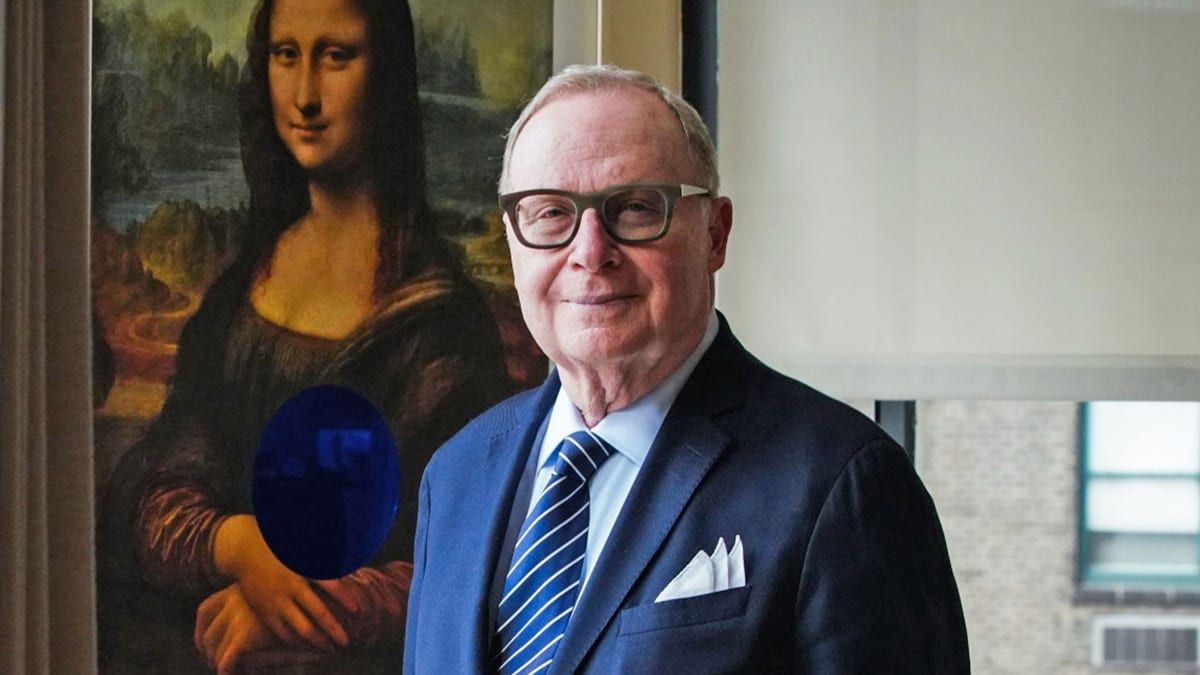
“Find the brand that consumers love and the corporate parent has neglected. That is the entire trade.” Thomas H. Lee
If you were studying private equity in 1994 and you wanted one deal to understand how the whole industry actually worked, Snapple was the case file. Thomas H. Lee had bought it in April 1992 for $135 million, taken it public eight months later, and sold it to Quaker Oats in March 1994 for $1.7 billion. The full cycle ran twenty-four months. The return was 6.7 times the original equity. The Snapple trade is still taught at every serious finance school three decades later, and the man who did it built a forty-year career on running the same playbook.
A history degree and a Boston bank
Thomas H. Lee was born in Boston in 1944. He went to Harvard College and took a history degree in 1965. He never went to business school. He drifted into Wall Street through L.F. Rothschild in the late 1960s, then moved back to Boston in the early 1970s to run high-tech lending at First National Bank of Boston as a vice president.
In 1974, at thirty, he left the bank and founded Thomas H. Lee Co with approximately $150,000 of personal capital. The firm spent the next fifteen years doing mid-size leveraged buyouts of New England consumer and industrial companies that almost nobody in New York paid attention to. Sealy Mattress. First Alert. Hills Stores. Small, profitable, slightly underloved consumer franchises bought at five to seven times EBITDA, financed with modest leverage, sold to strategics three to five years later.
It was, in retrospect, the perfect apprenticeship for what came next.
The Snapple deal
By 1991 the leveraged buyout market had essentially closed. Drexel had collapsed. Milken had pleaded. The Boesky cooperation had unwound the previous decade’s deal network. The RJR Nabisco aftermath had soured institutional investors on the entire asset class. Most private-equity firms either shut down or downsized.
Thomas H. Lee Co kept operating. In April 1992 it acquired Snapple Beverage Corp, a Long Island-based maker of bottled juices and iced teas, for $135 million from the three brothers who had founded it. The brothers wanted to sell. The brand was beloved. The product line was growing fast. The parent ownership had been benign but unfocused. Almost every condition Lee had been screening for was present.

What Lee did next is what made the deal legendary. He moved.
Eight months after closing, in December 1992, he took Snapple public on Nasdaq. The IPO was oversubscribed by more than ten times. Snapple’s stock more than doubled in its first week. The public-market valuation set a marker for the brand’s strategic value that the private-market acquisition had not.
Through 1993 he kept executing: aggressive marketing (the famous “Wendy” ad campaign), expanded distribution into convenience stores and gas stations, new product line extensions, and a relentless emphasis on the brand’s quirky, anti-corporate identity. Revenue more than doubled in eighteen months.
In March 1994, with the brand at its peak public valuation, he sold the company to Quaker Oats for $1.7 billion in stock. The deal closed two years and one month after his original acquisition.
His original $135 million had become roughly $900 million for himself and his investors. The leveraged structure had used about $75 million of equity and $60 million of debt; the equity multiple was even higher than the gross multiple. The Snapple trade became the canonical example of what a well-executed mid-market LBO could produce inside a single consumer-trend window.
The aftermath, and a cautionary footnote
Quaker Oats did not do well with Snapple. The corporate parent that had been so willing to pay $1.7 billion at the brand’s peak failed to maintain its quirky positioning and distribution. Three years later, in 1997, Quaker sold Snapple to Triarc Companies for $300 million. The roughly $1.4 billion writedown is one of the most cited examples in business history of a strategic acquirer overpaying for a consumer brand at a peak.
For Lee, the aftermath was not his problem. The asymmetry of the trade is, in some sense, the entire reason the Lee playbook works. The strategic buyer is willing to pay strategic value at the moment of acquisition. What happens to the brand inside that buyer’s portfolio afterward is irrelevant to the seller’s realised return.
The Lee Method
What made Snapple a teachable case rather than a lucky hit is that the moves are repeatable. Across more than thirty years and many billions of dollars in subsequent deals, the same seven or eight habits keep surfacing.
-
Move 01
Hunt for neglected consumer brands
The brand has customer love. The current owner has corporate inattention. The gap between the two is the discount you are buying.
-
Move 02
Buy from a motivated seller
Family-owned, founder-tired, conglomerate-divesting. Negotiation gets easier the more genuinely the seller wants out.
-
Move 03
Use modest leverage
The cycle on consumer brands can be short. A capital structure that lets you survive a bad twelve months is worth more than one optimised for a great twelve months.
-
Move 04
Move fast on operations
The window between acquisition and exit is the only time you control the brand outright. New marketing, distribution, product extensions: weeks, not quarters.
-
Move 05
Use the public market as a value setter
An IPO is not an exit. It is a price discovery mechanism that establishes the brand's strategic value before you negotiate the final sale.
-
Move 06
Sell to a strategic at the peak
The strategic buyer is paying for the customer relationship, not for the EBITDA. Their willingness to overpay is your return.
-
Move 07
Compress the timeline
Two years is the new five years. The faster you run the cycle, the lower your time-discounted risk and the higher your IRR.
-
Move 08
Walk away cleanly
What happens to the brand inside the strategic buyer's portfolio after the sale is not your problem. Take the cheque and find the next neglected brand.
What he was getting at
For the operator audience this site is built for, the Lee archetype is unusually accessible. The deals are mid-market, not multi-billion-dollar mega-buyouts. The playbook is mostly operating, not financial engineering. The capital required is reachable for any serious institutional partner. The discipline is the rare thing.
Tom Lee died in February 2023 at the age of 78. The Snapple trade outlived him by decades and will keep being studied at every business school that teaches private equity for as long as the discipline exists. His chapter in Masters of Private Equity and Venture Capital, titled “Mining for the Right Deal,” is the most direct first-person account of the mid-market consumer-LBO playbook he ran for forty years. Anyone serious about doing deals like Snapple should read it.
Career timeline Key moments
- 1944 Born in Boston, Massachusetts.
- 1965 Graduates from Harvard College with a degree in history. He never attends business school.
- Late 1960s to 1974 Works at L.F. Rothschild and then First National Bank of Boston, where he heads the bank's high-tech lending group as a vice president.
- 1974 Founds Thomas H. Lee Co with approximately $150,000 of personal capital. The firm operates quietly for fifteen years, doing mid-size leveraged buyouts of New England consumer and industrial companies.
- 1989 to 1991 The collapse of Drexel Burnham, the Boesky and Milken indictments, and the RJR Nabisco aftermath dry up the LBO market. Thomas H. Lee Co continues operating but at much lower deal volume.
- April 1992 Acquires Snapple Beverage Corp for $135 million. The deal is widely seen at the time as the first significant leveraged buyout to close after the post-1989 market freeze.
- December 1992 Takes Snapple public on Nasdaq just eight months after acquisition. The IPO is heavily oversubscribed.
- March 1994 Sells Snapple to Quaker Oats for $1.7 billion in stock. Lee personally and his investors realise roughly $900 million on the original $135 million investment.
- 1996 to 2005 Continues doing large consumer-and-industrial LBOs through what becomes Thomas H. Lee Partners. Notable deals include Sealy Mattress, First Alert, Fisher Scientific, and General Nutrition.
- 2006 Leaves THL Partners after disagreements with junior partners about the direction of the firm. Founds Lee Equity Partners later that year.
- 2008 to 2020 Runs Lee Equity Partners as a smaller, more focused mid-market LBO shop. The firm closes several billion-dollar funds in financial services, technology, and consumer businesses.
- February 23, 2023 Dies in New York City at the age of 78. Tributes from across the private-equity industry describe him as one of the architects of the modern LBO.
In their own words Selected quotes
-
“Find the brand that consumers love and the corporate parent has neglected. That is the entire trade.”
Thomas H. Lee -
“We do not buy companies. We buy a hypothesis about a brand and then we test it as fast as we can with the company's own cash flow.”
Thomas H. Lee, in Masters of Private Equity and Venture Capital -
“Speed is a competitive advantage almost nobody else in private equity uses. Most firms take seven years. We had Snapple in and out in twenty-four months.”
Thomas H. Lee, on the Snapple exit -
“If you can run the entire deal cycle inside one consumer-trend window, your returns look like venture capital. If you cannot, they look like fixed income.”
Thomas H. Lee, attributed in Boston industry coverage -
“The most underrated input in private equity is the personality of the founder you are buying from.”
Thomas H. Lee
Notable and surprising Things you might not know
- He went to Harvard College for history, never to business school. He learned finance on the job at L.F. Rothschild and First National Bank of Boston.
- He founded Thomas H. Lee Co in 1974 with roughly $150,000 of personal capital. For its first fifteen years the firm did mid-size buyouts of New England consumer and industrial companies that almost nobody in New York paid attention to.
- The 1992 Snapple acquisition was widely considered the first significant leveraged buyout to close after the 1989 to 1991 market freeze, ending nearly three years in which essentially no LBOs of any size had closed.
- He took Snapple public on Nasdaq eight months after acquiring it. The IPO was the second largest of 1992 and was oversubscribed by a factor of more than ten.
- He sold Snapple to Quaker Oats in March 1994 for $1.7 billion in stock. The full cycle, from his acquisition to his exit, ran twenty-four months. The original $135 million investment returned roughly $900 million, a 6.7-fold gross multiple in two years.
- Quaker Oats later sold Snapple to Triarc Companies for $300 million in 1997. The Quaker writedown is one of the most cited examples of strategic acquirers overpaying for consumer brands at a peak.
- He contributed the chapter 'Mining for the Right Deal' to Masters of Private Equity and Venture Capital, one of the most widely circulated first-person accounts of the classic mid-market LBO playbook.
- He left Thomas H. Lee Partners in 2006 after disagreements with junior partners about the direction of the firm and immediately founded Lee Equity Partners, which closed multiple billion-dollar funds over the next fifteen years.
The Playbook How Thomas built it
- 01 Pick neglected consumer brands inside larger conglomerates. The parent's lack of attention is the discount you are paying for.
- 02 Move fast on operational improvements. The window between acquisition and exit is the only time you control the brand outright.
- 03 Public offerings are an interim step, not an exit. Use the IPO multiple to set up the strategic sale.
- 04 Speed of execution is the difference between average and great. Snapple closed in twenty-four months, not seven years.
Published May 16, 2026